
I sat on the leather bench, wiping the perspiration from my palms. Damp hands could slip and cause mishaps on the ivory keys. The walls around me were dark wood, only punctuated with two landscapes in heavy gilded frames and accented with overhead museum lights. The piano was placed diagonally in the room, filling the space with its presence, and flanked on the left by two wingback chairs that featured large royal blue peacocks and flowers cascading freely over the ivory background. Several rugs in dark crimson and bone covered the floors, overlapping in a way that only revealed small amounts of the parquet floor. To the right of the piano was a single wood chair, dark and stiff, adjacent to a small table holding a floral teacup, a small brown notebook, and a clear cup of red pencils. Each week, I entered the den with my salutation being praise for the exiting piano student. “Oh Molly, that was just perfect.” Perfection was a goal that did not interest me. That week, I just wanted to complete Bach’s prelude with as minor collateral damage as possible so I could introduce a new composer of my choosing to my piano teacher. This was the deal made between teacher and pupil.
My fingers skipped over the keys, producing arpeggio after arpeggio as the score dictated for 35 measures. I steadied the tempo like my breath with prolonged inhalation, building conflict before I exhaled a resolution. The final moments of the piece required a slowing of tempo and articulating a small flourish before the final chord. Her oversized glasses rested on an angular nose, and a red pencil rapidly twirled in her hand, itching to mark a score. Her sighs, long and heavy, were always absent from the pleasure reserved for Molly. “Well, that wasn’t too bad.” The word “too” sounded like the vowel stretched and replicated for minutes. “Now, we have a deal.” Her signal sent me to my cloth tote, where I quickly retrieved a new piece of music and placed it proudly on the piano. Unlike the pristine and mechanical print of Bach, this piece looked like it was handwritten, providing an earthy and sullied feel that excited my ten-year-old hands. Her face was framed with the glasses, and she looked at the piece. She leaned forward, inching closer to my right ear, and her hand flattened the score as her finger landed on the composer’s name, Scott Joplin. “Oh.” This vowel was the sharpest staccato before she leaned back into her chair. “This is not music.”

Lines of demarcation were initially agreed upon borderlines as a result of a peace treaty or armistice. The Treaty of Tordesillas in 1494 produced the most famous Line of Demarcation, separating the lands colonized by Spain and Portugal with a meridian border in the Atlantic Ocean. The Mason-Dixon Line demarcated four states during British Colonialism in America. The Berlin Wall physically distinguished West Germany from East Germany while symbolically dividing The Soviet Eastern Bloc from the Western World. The borders were intended to distinguish and differentiate places that were once unified.
World War II provided a landscape for the term to enter the popular language, and after the war, there was a significant spike in its usage. Although the term is used as a proper noun, referring to myriad political borders, the “line of demarcation” began to represent any type of separation, division, or distinction. Now, the term exists in myriad disciplines as a means to distinguish what is unique and note-worthy about a particular branch of knowledge or idea. A line of demarcation defines what is art and what is not art; what is science and what is not science; what is natural and what is not natural; and what is acceptable and what is not acceptable. Simply, the idea conveys what is in and what is out.
In 1967, Willi Smith was out, allegedly for violating Parsons School of Design’s strict rule prohibiting same-sex relationships. Willi Smith was raised in Philadelphia by his grandmother, who supported his proclivity for books and drawing, and by the time he was in his teens, Willi Smith was interning for courtier Arnold Scaasi. When Willi Smith matriculated at Parsons, Carmela Ledger Hembo, admission assistant, deemed him to be the most talented fashion design applicant in the school’s history. Smith began to supplement his formal education housed on 5th Avenue with the downtown life below 14th Street. New York City was in the midst of decay by the late 1960s, and “downtown” implied a Pollock-esque frenzy of artists, DJs, writers, and street people experimenting with culture and ideas amidst the failing postwar landscape. When Willi Smith was dismissed from Parsons, he crossed the line separating uptown from downtown and took up residency in the life happening below 14th Street.

Amongst the boundary-pushing downtown denizens, Willi Smith found inspiration and imagination in artist studios, subway tunnels, and under Larry Levan’s musical spell at the Paradise Garage. Willi Smith continued crossing boundaries and assisted Christo and Jeanne-Claude with The Wedding Dress, a piece mixing art and fashion with billowing parachutes attached to a slim bodice wrapped in macramé. His success translated to his first line, Digits, which featured the designer’s love of workwear, travel, and pop art. Willi Smith also began weaving narrative into Digits, telling stories of people relaxing, frolicking, and flirting in an editorial manner that would much later be prominently featured in Vogue and Harper’s Bazaar. Willi Smith wielded work that was acceptable while being cutting edge, sportswear while being fashionable, accessible while being art, and exceptional while being democratic.
Willi Smith recoiled from the elitism found in the couture houses and upscale American fashion brands. Although impeccably constructed and beautifully executed, the brands were void of the downtown artists, dancers, and writers he found inspirational. Equally, he felt the restrictions of a high-profit model constrained the agency and creativity of designers while excluding the people not found in the showrooms of uptown Manhattan. After the demise of Digits, Willi Smith partnered with his former assistant, Laurie Mallet, to launch WilliWear in 1976.
Utilizing his almost-celebrity status in the art world, Willi Smith translated his love for downtown life into the brand. WilliWear featured collaborations with prominent artists, making uniforms for the workers assembling Christo and Jeanne Claude’s Surrounded Islands (1983) and Pont Neuf Wrapped (1985). The designer also premiered a collection at Alvin Ailey, using the company’s dancers as models, and he designed costumes for choreographers Dianne McIntyre and Bill T. Jones. Ruth Carter reached out to Willi Smith while costuming Spike Lee’s School Daze. T-shirts featured artist friends like Barbara Kruger, Jenny Holzer, and Ida Applebroog. Keith Haring designed sets for WilliWear fashion shows, and Nam June Paik shot video footage used in stores and presentations. Willi Smith fused art and fashion into an interdisciplinary approach decades prior to the current productions staged by major fashion houses.
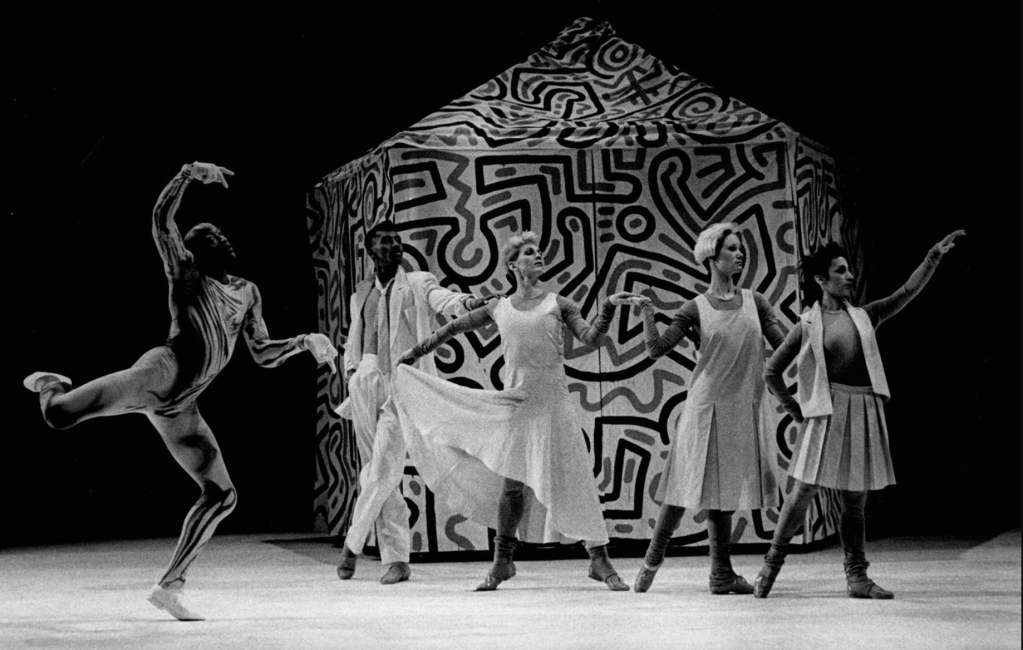
While WilliWear eliminated the boundaries between downtown art and uptown life, he completely eradicated the lines of demarcation that separated the Street and fashion. Willi Smith’s avant-garde approach combined innovative shapes and vibrant fabrics with the principles of egalitarianism and democracy. Interrogating the practice that a lower price point sacrificed quality and style, WilliWear infused quality materials, craft, and style with affordability, selling the clothes in department stores from Belk to Bloomingdale’s across the country. Willi Smith designed pieces to be interchangeable and amendable. Women’s and men’s styles could be integrated, and sizing accommodated various body types. WilliWear, affordably priced, also included Buttrick and McCall patterns that accompanied each collection. Willi Smith wanted the imaginative style he witnessed in the downtown scene to translate into everyday life, giving people the freedom to interpret, mix, and alter the clothing to correspond to their personal style. He called this Street Couture. Willi Smith was not interested in interpreting and repackaging the styles seen below 14 Street for the wealthy elite shopping on 5th Avenue. WilliWear was for everyone, heralding the everyday people that created style without the financial trappings of fashion. Freeing the association of style as a sole accouterment of the wealthy, WilliWear encouraged people to be their own creators.
Willi Smith’s democratic ideas around Street Couture were the prototype of contemporary fashion’s streetwear, with many calling him the father of streetwear. In the U.S., streetwear has become racially coded, denoting styles from the Black community. It is critical to point out that the usage of “streetwear” by established fashion brands operates with a dual function, explaining what it is and what it is not. Streetwear is everything Black and is nothing white. Willi Smith was keenly aware of Black exclusion from the established fashion industry and offered a counterpoint that drew from his own Black queer experiences. He often exclaimed:
Being black has a lot to do with my being a good designer. My eye will go quicker to what a pimp iswearing than to someone in a gray suit and tie. Most of these designers who have to run to Paris for color and fabric combinations should go to church on Sunday in Harlem. It’s all right there.
Willi Smith brought all of himself to WilliWear, creating a gender-fluid, multi-dimensional, and omni-cultural line heavily informed by a Black aesthetic. His ethos was infectious, and within a few years, Willi Smith was the designer of the people.
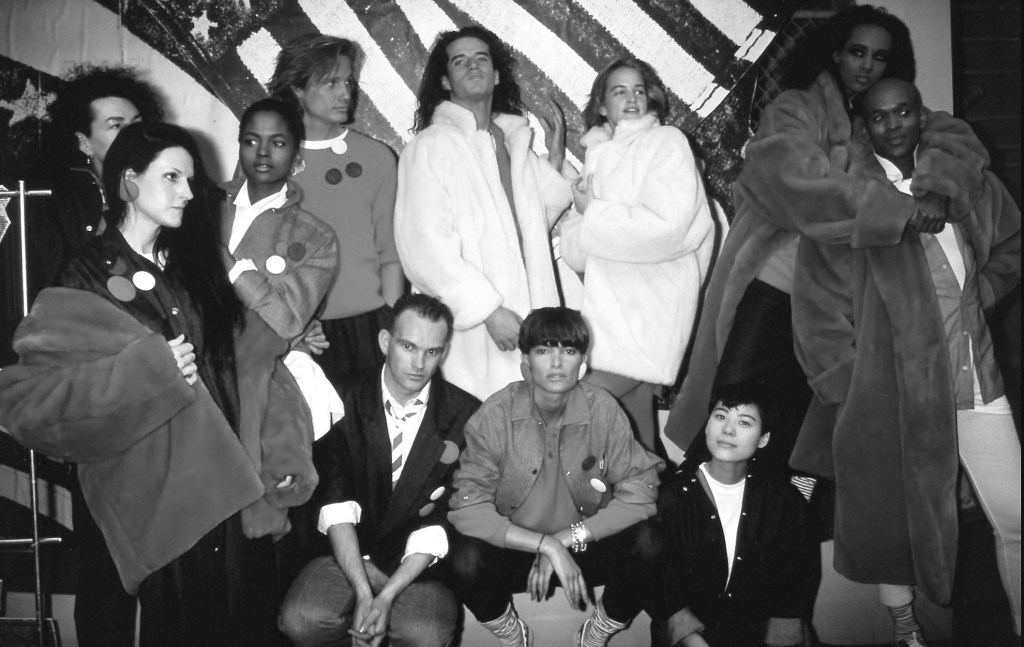
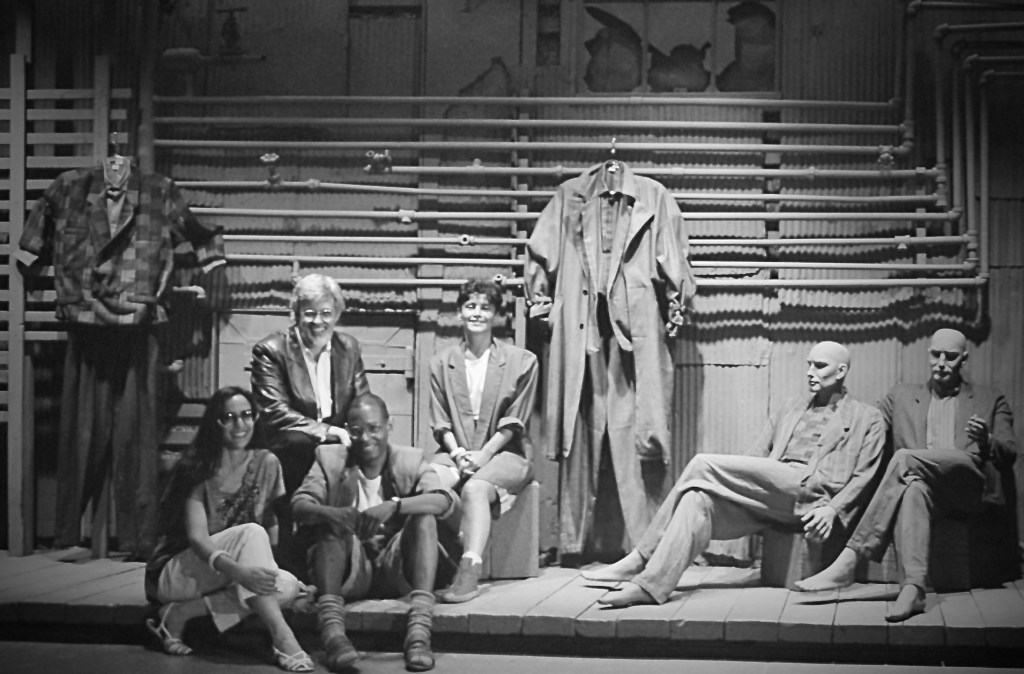
Everyday people’s love for WilliWear translated into a business generating over $25 million in annual sales, and by the 1980s, Willi Smith and Laurie Mallet had extended their department store real estate with boutiques in London and Paris. While an international presence is critical in the fashion industry, Willi Smith remained centered on his democratic ideals and opened a showroom at 209 West 38th Street in New York City’s Garment District. Unlike the aspirational wealth featured in the showrooms on Madison Avenue, Willi Smith wanted to celebrate the culture being birthed on the streets. Allison Sky and James Wine of SITE, a collective of architects and artists formed to challenge the conventions of built environments, were ideally suited to create Willi Smith’s vision. Willi Smith emphasized the WilliWear showroom should be for everyone, highlighting pleasure and creativity. Together, the group toured Willi Smith’s favorite places in the city until the architects fully understood the Black and queer cultural importance of the Christopher Street Piers and the Paradise Garage. SITE worked to bring the Street into the showroom, literally scavenging the city in the darkness of night for pipes, bricks, and other industrial materials.

WilliWear opened its doors in 1982, revealing the streetscapes so essential to the designer’s vision. SITE collapsed the border separating the interior and the exterior, bringing the streets so loved by Willi Smith indoors. Concrete blocks, bricks, chain link fences, multiple window sizes, and various piping created the interior street scene that exploded with life. The reception desk was decaying bricks fitted with sleek glass, fences doubled as clothing displays, sidewalks were also catwalks, and pipes were used to hang clothes. The patterns resembling brutalist sculpture were unified when the interior was painted a dove gray. The color made the interiors a fantastic dream and simultaneously functioned as an independent entity and support for vibrant pants, coats, sweaters, and shirts of WilliWear.
The brand solidified its aesthetic theme with the visual imagery utilized in signage, labels, and advertisements. Graphic artist Bill Bonnel created a black-and-white label that united the name of the brand and the name of the designer, signaling to all that the two were synonymous. The label was often crumpled and photographed to provide a feel of folded fabric and street debris. Bonnel often transgressed many rules of design to buttress the brand’s ideals while forging new ideas about postmodern visuals. The jagged edges of the Street combined with the whimsy of the brand in invitations, announcements, and press kits. Fashion shows were events where artists, multimedia presentations, and friends presented bold styles while interacting with the showroom. By the end of 1982, WilliWear had a clearly unified theme: It was about the people, from the people, for the people.
The democratic ideals underscored on the streets were being tested by the federal government. In 1982, two significant changes to U.S. elections would drastically alter national nominations and unilateral voting. On January 15, 1982, The Democratic National Convention created superdelegates. Unhappy with the 1972 nomination of George McGovern and the 1976 nomination of Jimmy Carter, the DNC wanted to prevent political outsiders from securing the party’s nomination for president. The solution was to make members of Congress, Democratic governors, and state elected officials who were Democrats automatic delegates. A new line of demarcation indicated the true gatekeepers of political power. The effect would prevent anyone outside of the political machine from securing the nomination.
After months of debate in the House of Representatives and the Senate, the Voting Rights Act of 1965 approved the extension of the legislation. This was not done without compromise. The majority of the debate focused on Section 2 of the amendment, determining that the results of a law or practice that restricted voting were more critical than the intention of that same law or practice. The Reagan Administration and Republicans were concerned the amendment would require proportional representation of protected racialized groups and would only vote in favor if a disclaimer were put in place. The caveat won support by conservatives in power, and Reagan signed the legislation into law on June 29, 1982. In the same month, Reagan became the first U.S. President to speak to both houses of the British Parliament. Addressing the British House of Commons, Reagan proclaimed how American Democracy would leave Marxism on the ash heap of history. While targeting Marx’s economic theory, Reagan failed to mention the failures of the American political system that continually shoveled coal on the American populace.
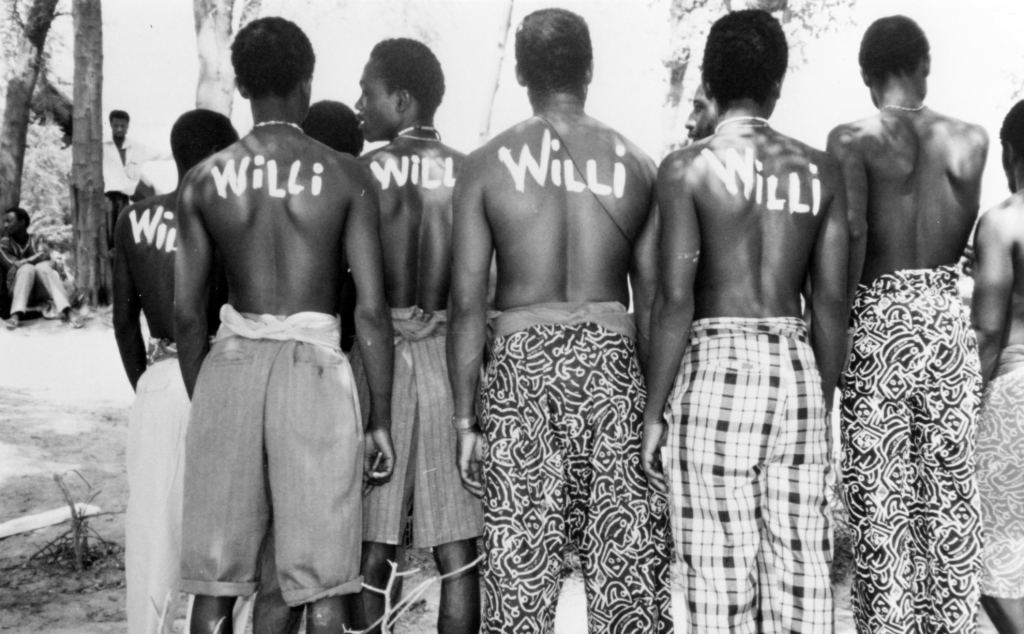
Willi Smith continued to embrace the street, drawing a wide circle for many Black and queer people abandoned by society. While WilliWear was successful in encompassing diversity, Willi Smith was often the target of criticism, including white journalist Lynn Darling in an Esquire article labeling him as “so white.” Facing the paltry criticism of established White Supremacy culture, Willi Smith continued to show solidarity with his Black and queer counterparts, redefining and expanding his ideas around identity. His creative ideas explored Afro-centric ideas and the transatlantic slave trade during a trip to Senegal. Expeditions, WilliWear’s 1986 spring collection, featured Dakar locals and dancers from Compagnie du Théâtre National Daniel Sorano. Willi Smith continued to work with people and ideas from all walks of life to celebrate his runways, dissolving borders to champion a global people.
On April 16, 1987, Willi Smith returned to the U.S. from India with a severe case of pneumonia requiring hospitalization. Doctors at Cedar Sinai determined Willi Smith was suffering the effects of AIDS, a disease ignored by the Reagan administration. He died the next day. AIDS was also ravishing Michael Brody, owner of one of Willi Smith’s favorite locations, The Paradise Garage. Brody would shutter the club by the end of September 1987. The consequential loss of talent and creativity due to AIDS may never be realized in this country. By the end of 1987, a significant voice and place for the people had disappeared.
My feeble performance of the Bach prelude earned a spot on my piano teacher’s fall recital in 1982. My lessons centered on the Baroque musician, practicing the breath and life out of the composer’s 35 arpeggiated measures. Each week, incredible tedium was drilled into my fingers. While lessons only revered Bach, my home piano held the music of Scott Joplin. Joplin’s ragtime, syncopation, counterpoint, and capturing of Tin Pan Alley made my fingers jump with vibrancy. During the recital, I followed Molly and her perfect interpretation of Antonio Vivaldi. I walked onto the stage wearing a striped WilliWear sportcoat with the sleeves rolled and pushed upward, holding the score. Sitting at the piano, I retrieved a score hidden in the folds of Bach. I situated Scott Joplin in the center of the piano, took a breath, and my fingers began frolicking over the keys. I smiled. This was indeed music.
Sound + Vision: Street Coutur (The 1982 WilliSmith|WilliWear Edition)

This week’s playlist imagines a night in 1982 with Willi Smith on the dance floor and Larry Levan in the booth of Paradise Garage.
- Chariots of Fire, Vangelis
- Computer Love (2009 Remastered), Kraftwerk
- Let’s Rock (Over & Over Again), Feel
- The Escapades Of Futura 2000 (12-inch Extended Mix), Futura 2000
- Lady Cab Driver, Prince
- Glad To Know You, Chaz Jankel
- Don’t You Want Me (Extended Mix), The Human League
- Don’t Make Me Wait (MAW Remix), NYC Peech Boys
- It Should Have Been You (Larry Levan Mix), Gwen Guthrie
- Walking On Sunshine ‘82, Rockers Revenge
- Call Me, Skyy
- Play At Your Own Risk (12-inch Version), Planet Patrol
- Hard To Get, Rick James
- In The Name Of Love (12-inch Dance Extension), Thompson Twins
- “D” Train Theme, D Train
- Hip Hop Bee Bop (Don’t Stop) (Remix), Man Parish
- Right On Target (Featuring Paul Parker), Patrick Cowley
- Do You Wanna Funk? Sylvester + Patrick Cowley
- Native Love (Step By Step), Divine
- Don’t Go, Yaz
- Everybody (You Can Dance Remix), Madonna
- Dirty Talk, Klein & M.B.O.
- Early In The Morning (12-inch Mix), The Gap Band
- 777-9311, The Time
- Der Kommissar (Extended Version), Falco
- The Look Of Love (1990 Remix), ABC
- I Love A Man In Uniform, Gang Of Four
- I Can’t Go For That (No Can Do), Hall & Oats
- Nipple To The Bottle (Long Version), Grace Jones
- I Know There’s Something Going On, Frida
- (Keep In Touch) Body To Body, Shades Of Love (Sadly, not on Spotify)
- The Voice Of Q (12-inch Mix), Q
- I’ll Do My Best, the Ritchie Family
- Baby Be Mine, Michael Jackson
- Looking Up To You, Michael Wycoff
- That Girl, Stevie Wonder
- Cutie Pie, One Way
- The Message, Grandmaster Flash & The Furious Five
- Cuckoo Clocking, Fab 5 Freddy
- Straight To Hell (Extended And Unedited), The Clash
- Save A Prayer, Duran Duran
- I Keep Forgetting (Every Time You’re Near), Michael McDonald
- Avalon, Roxy Music
Listen on Spotify or YouTube:
 The Last Boudoir in Angier
Leave a comment