Turquoise. Orange. Navy. The vertical stripes repeated the pattern across the dove-gray cotton. Intersecting vertical lines offered different color stories: purple, red, and royal. The pattern is coordinated to draw the eye to the meeting of similar colors on the diagonal. Royal meeting turquoise, orange linking with red, and navy crossing royal, repeating the pattern to reveal a mystery that was mechanical, geometrical, and whimsical. The popped collar, unbuttoned cuffs, and shirttail escaped the confines of the sweater, accenting a shocking pink with a minuscule plaid of red, white, and gray. The brush cotton trousers, pleated and oversized, were a darker shade of royal with small thread-sewn polka dots of orange, turquoise, red, and gray. With the pants’ cuff rolled to the mid-calf, orange striped socks played peek-a-boo between the pant leg and work boots. I smartly threaded the powder blue braided belt through the pant loops, knotting the excess belt and allowing the thick ropes to hang to the top of the thigh. I made one last inspection in the mirror as the car horn honked, and my mom announced, “Time to go.”
At the turn of the twentieth century, wealthy men attending elite colleges in the American Northeast began expressing their youthful vigor and social status sartorially. Rebelling from the more formal style of their fathers, undergraduates adopted button-down shirts and knit v-neck sweaters combined with pleated flannel trousers, tweed jackets, navy sports coats, and patterned socks tucked into moccasins and sneakers to define the leisure and sporting style of the American elite attending a university. Many of these white men attended preparatory schools meant to funnel students into the Ivy League. By the 1920s, the relaxed style these collegians heralded became known as “preppy.” The preppy style was targeted by retailers like Brooks Brothers and J. Press, featured in magazines and movies, and lampooned in Lisa Birnbach’s The Official Preppy Handbook. In 1982, Preppie!, an action video game from Adventure International, was one of the best-selling cartridges for the Atari home video console.
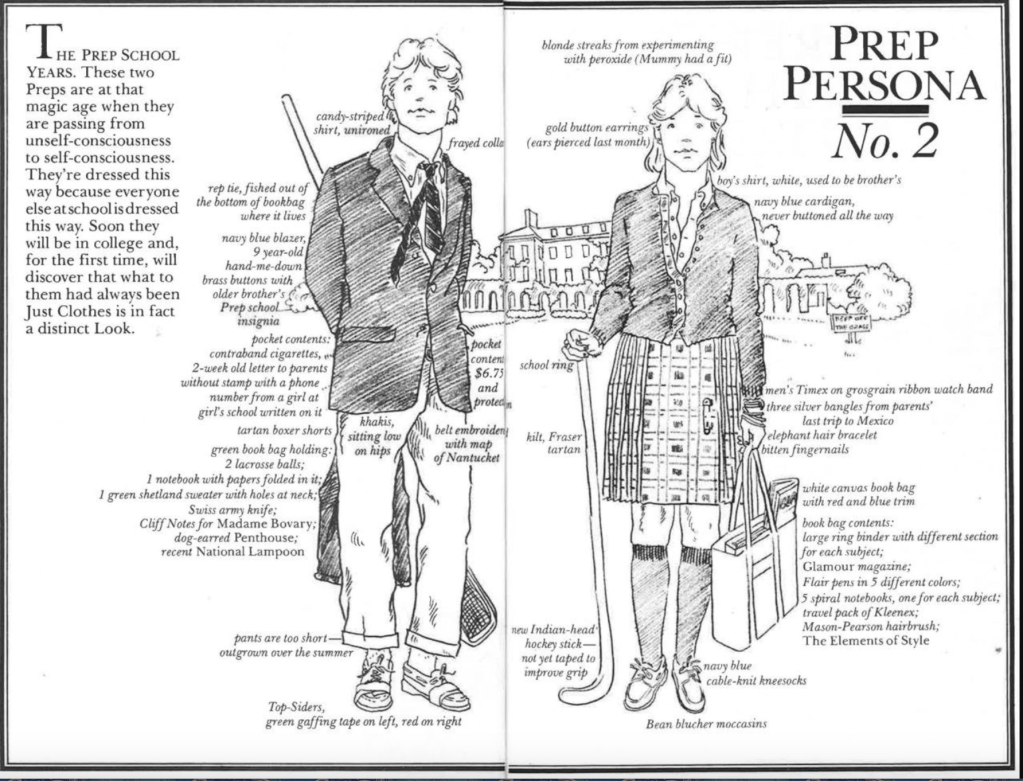
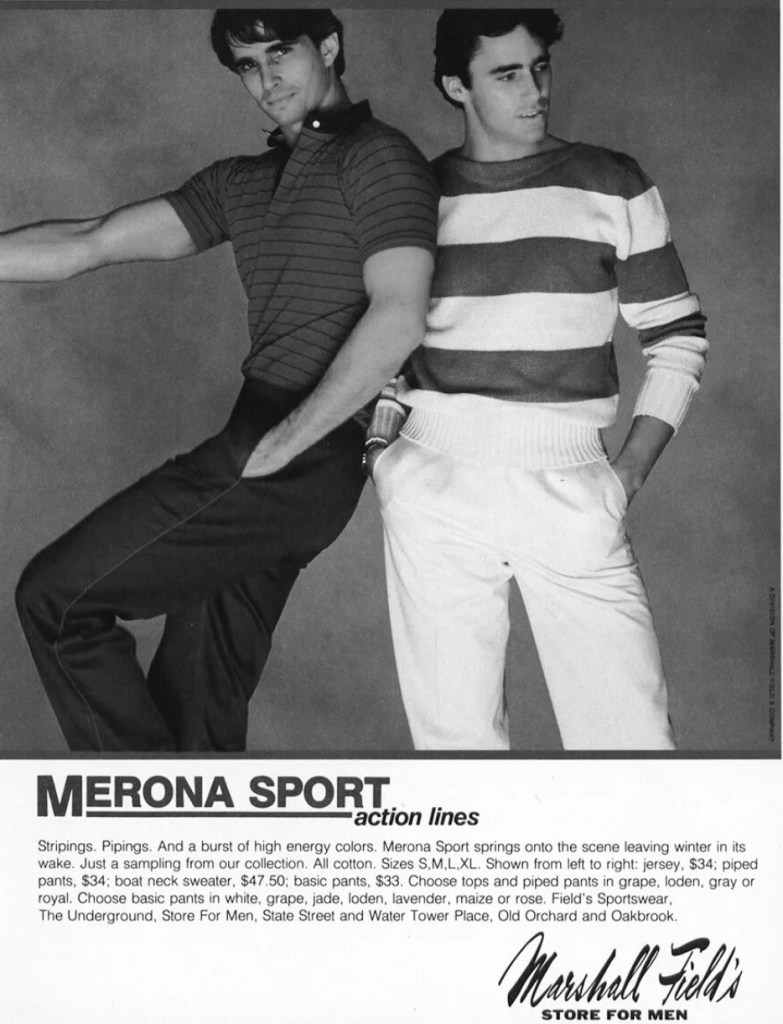
The preppy style started as a defiant and young revolution to bring an informal and sporting style to the formal conventions of college life. As these young aristocrats entered the professional arena, they would not relinquish their style, keeping their relaxed clothing. Within a few years of sports coats and loafers in executive clubs, preppy established itself as the norm, becoming synonymous with “traditional.” Preppy was a sign of social mobility, signifying an upward trajectory within the economic landscape and the realization of the American Dream. Every mother wanted this for her child; mine was no different. As my college entry date approached in 1989, she would return from shopping with bags from Brooks Brothers, Ralph Lauren, and Lacoste. These offerings were intended to make me presentable at church, restaurants, and the country club. When she returned with a shopping bag from Rich’s, I knew the contents would contain preppy clothes that were colorful with deep hues, rich in texture, and intricate with patterns from a brand exclusive to the upscale department store: Merona Sport.
Unlike other clothiers focusing on the established color palette of the 1980s preppy, Merona Sport widened the pigment range, adopted the geometric lexicon of the Memphis Group, and introduced soft styling and looser fit to redefine traditional menswear. The elements of preppy style were evident with the brand’s offerings of Oxford shirts, knit sweaters, and pleated pants, which were appealing to my mother. Merona Sport also provided a bold compass that challenged the existing preppy norm, which was appealing to me. By 1989, subversion was my keen weapon, and I wielded it everywhere. I toted Karl Marx’s manifesto, lined my eyes with a Chanel charcoal pencil, and carried my conscientious objector status everywhere. Wake Forest boasted a spectrum of preppy styles with navy sport coats, pastel polo shirts, and bare ankles slipped into boat shoes. Thoroughly understanding the complexities and demands of socio-economics, I turned preppy on its head, mixing Merona Sport patterns, colors, and shapes as fashionable satire. If I was going to be force-fed the American Dream, I wasn’t going to eat it with their silver spoon.
Youth is about rebellion. The younger generation should question the actions and mores in society as a way to evolve culture and shape identity. By the end of 1989, youth-led rebellions were taking place around the globe. Student demonstrations calling for democratic reform fueled protests in Beijing’s Tiananmen Square. Hungarian youth cut holes into the Iron Curtain, opening the borders to Austria. West Berlin’s young people held vigils at the Berlin Wall, calling for its destruction. In Czechoslovakia, the younger generation fueled the Velvet Revolution that toppled the communist government. Europe’s most violent anti-communist movement occurred in Romania when youth took up arms and entered Bucharest’s Republican Square.
While long-time regimes were changing in continental Europe, there was a different type of youth uprising in England. Known as the world’s first industrial city, Manchester hosted a young Friedrich Engels in the 1840s, who described the landscape as a place of “filth, ruin, and uninhibitedness.” Engels’s description was still apt in the early 1980s. Post-industrial Manchester had lost over a quarter of its manufacturing jobs, and the hellish working conditions remained unchanged from the Victorian Era. When Margaret Thatcher entered Downing Street, she focused on the revitalization of London’s capitalists, neglecting the industrial city of the North and withholding investment, support, and funds from its working-class citizens. High unemployment, neglected and decaying infrastructure, and the demonization of manufacturing proved ripe conditions for change.
Tony Wilson, a regional television star, was fueled by his love for Manchester and his interests in Marxism, liberation theology, and International Situationism. Wilson was appalled at the way the London elite treated the labor city with disdain and ridicule. Influenced by his political leanings, Wilson, along with Alan Erasmus, founded Factory Records. The record company disrupted the capitalist model of business, splitting royalties evenly with artists and allowing them to keep the rights to their creations. Amid economic despair, Factory Records was fertile ground for a cultural renaissance, signing and promoting Cabaret Voltaire, Joy Division, New Order, Orchestral Maneuvers in the Dark, The Durutti Column, and The Happy Mondays.
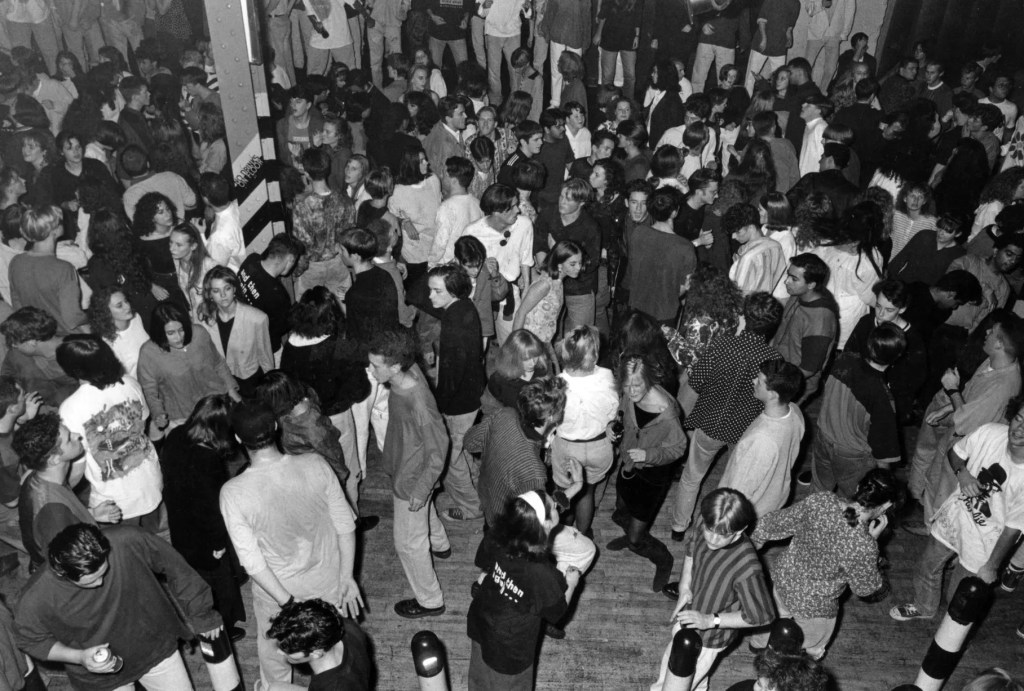
Building on Factory Records’ success, Wilson partnered with the members of New Order in 1982 to convert an abandoned warehouse into a nightclub called The Haçienda. The club’s name was taken from a 1953 seminal Situationists International text about the ideal city, Formulary for a New Urbanism, by Gilles Ivain, a pseudonym of the French poet Ivan Chtcheglov. The text calls for the Haçienda to be built. Intended to be a cathedral, incubator, and lab, The Haçienda’s aim was stated clearly on its membership form that read “Intention: to restore place.” By 1986, the venue transitioned from mainly showcasing bands to hosting dance nights. House music found in the underground dance scenes of Chicago, Detroit, and New York inspired Haçienda DJ Mike Pickering. Pickering initiated the Friday night dance party, Nude, playing American imports and packing the venue to its maximum capacity of 1200 people.
After the success of Nude at the Haçienda, America’s house music centered in Manchester spread to other venues across the United Kingdom, combining with the drug ecstasy to evolve into acid house. Danny Rampling founded Shroom, an intimate club of 300, drawing a youthful mix of like-minded people of all races, classes, and sexual preferences. Nick Holloway spearheaded Trip (later Sin), spinning acid house at the London Astoria. The Soundshaft became the residence for Paul Oakenfold’s Future, the night merged house music, Ibiza summers, and a group of regulars known as the Love-Up Gang. By the summer of 1988, the youth of England crossed the lines of demarcation that separated them by race, class, gender, and sexuality to dance together. For the next 18 months, renegade parties swept the country, offering joy, unity, and ecstasy as the accouterments of this youth revolution. Although it was relatively short-lasting with long-standing cultural reach, the phenomenon continued into the summer of 1989 and was known as the Second Summer of Love.
While the youth of England were outwardly expressing their love, a collective of young hip-hop artists on the East Coast of America was turning inward as a way to navigate the end of the Reagan era. Eight years of Reagan’s domestic policies favored the wealthy and the corporations owned and controlled by the American elite, effectively engaging in class warfare. Reagan began his presidency by firing 11,345 striking air traffic controllers, barring them from future work with the federal government. Scholars underscore this event for establishing a trend where the productivity of the labor class will grow four times faster than their pay. Reaganomics focused on reducing corporate regulations, restructuring the federal tax codes, and cutting federal programs. The wealthy saw a pronounced increase in prosperity, while the lower classes were saddled with increased taxes. Reagan’s strident position on crime resulted in a rate of higher imprisonment while the rate of crime increased. The San Jose Mercury alleged that the administration’s involvement in the Iran-Contra Affair trafficked cocaine from Nicaragua to the U.S., igniting the crack epidemic that primarily ravaged poor, Black communities. Reagan’s policies stratified the class divide. In Kevin Phillips’s 1990 book, The Politics of Rich and Poor: Wealth and the American Electorate in the Reagan Aftermath, he states:
The 1980s were the triumph of upper America - an ostentatious celebration of wealth, the political ascendancy of the richest third of the population, and a glorification of capitalism, free markets, and finance.
The blunt repercussions of the Reagan era were felt painfully by the country’s underclass, and the disparities between rich and poor and white and Black structured into the systems and institutions were exacerbated. The U.S. touted itself as a democracy while operating as unbridled capitalists.
Popular culture is intrinsically linked to the experiences of the artist and the context in which the artist creates. Hip-hop reacted to the Reagan era with fervent compositions. Public Enemy, N.W.A, KRS-One, and Ice T spoke poignant lines about the harsh realities and political neglect of the inner city, drawing on a long tradition of Black Nationalism. While many rappers justly highlighted the systemic structures contributing to a harsh reality for Black Americans, the Native Tongue Collective looked to community and personal ideals as a means for survival and advancement.
Formed in 1988, The Native Tongues Collective included A Tribe Called Quest, De La Soul, Jungle Brothers, Monie Love, and Queen Latifah. The group took its name from the Louisville-based band New Birth and their 1972 single, “African Cry,” which proclaimed, “They took away our native tongues.” Native Tongues uplifted Afrocentric ideals, articulating self-determination, the critical nature of community, the importance of cooperation, the significance of understanding history and the land, and the integration of the spiritual and political. The philosophical underpinning of the Native Tongues was the antithesis of the hyper-capitalism championed by Reagan.
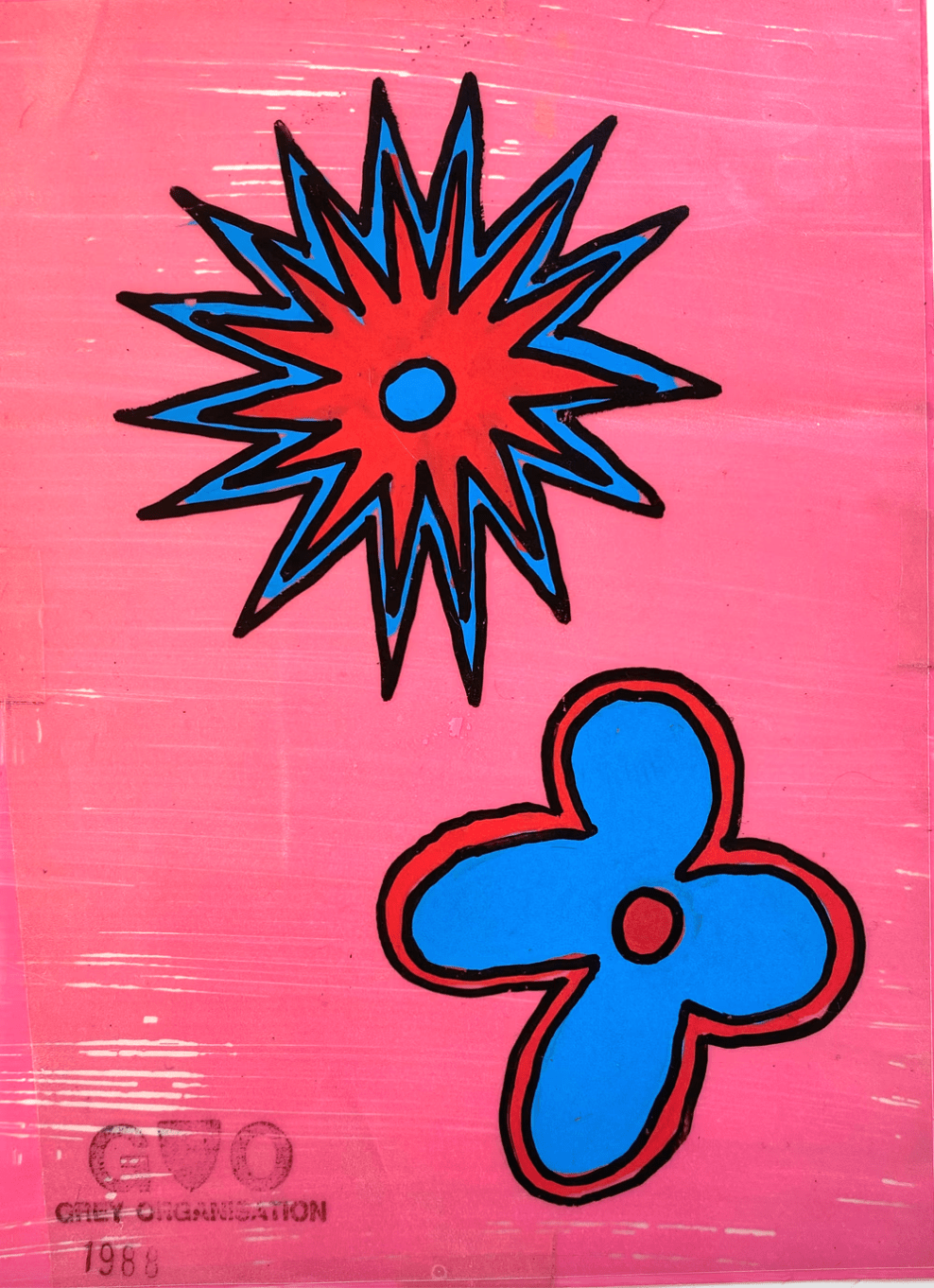
The messages of Native Tongues were always supported by their music. Relying on obscure and heavy sampling, leaning toward jazz, the groups slowed down the tempo and created space for ideas to foster. The Jungle Brothers sampled Bill Withers, Manu Dibango, and the Apollo 11 moon landing. Queen Latifah used 7th Wonders, Sly & the Family Stone, and King Errisson. Little Feet, Lou Reed, and Lonnie Smith underscored the lyrics from A Tribe Called Quest, and Johnny Cash, The Turtles, and The Rascals grounded De La Soul. Classic Motown, psychedelia, blue-eyed soul, and language tapes collaborated with quirky and upbeat lyrics, pushing the boundaries and expanding the parameters of hip-hop. The groups also frequently collaborated on each other’s records, emphasizing the significance of the collective. Music focusing on community combining witty lyrics with eccentric references utilizing a berth of audio samples characterized they style of Native Tongues. When 1989 offered De La Soul’s debut album, 3 Foot High and Rising, with floral cover art designed by the Grey Organisation, critics were quick to draw comparisons to 1967’s Summer of Love and label the epoch the D.A.I.S.Y. Age.
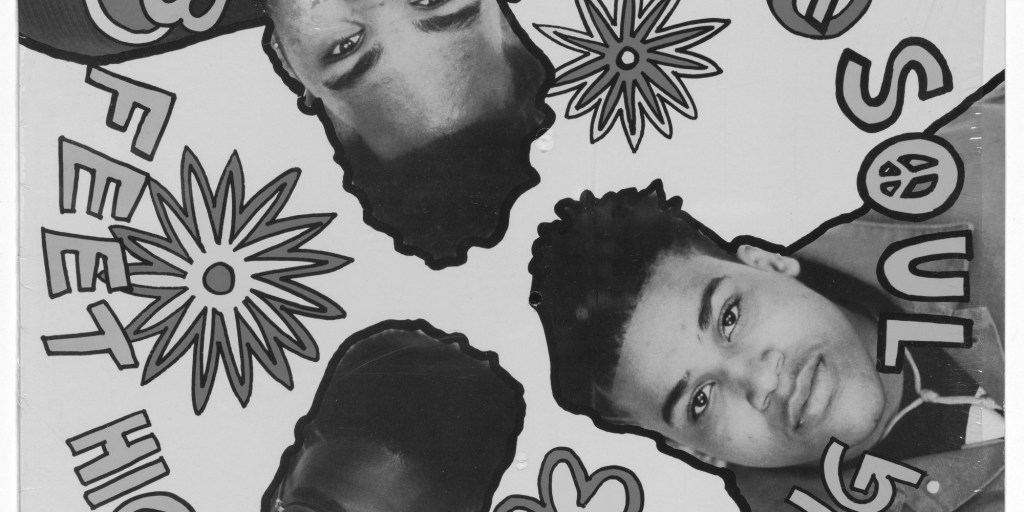
“It’s a Daisy Age” is the proclamation found on De La Soul’s debut album. Often expressed as the acronym, D.A.I.S.Y. represented “Da Inner Source, Y’all.” This inner source would be a direct counterpoint to the outward representation of Black America in the late 1980s. Native Tongues consciously usurped and replaced these images with more positive and accurate portrayals. Hypermasculinity took a back seat to the collective embracing of power-sharing genders. Assertion and inclusivity replaced aggression and exclusion. Burdens lightened with frivolity. The hyper-individuality found in American capitalism had no place in the collective consciousness of Native Tongues. The ethos of Native Tongues was no less political than the pertinent messages of Public Enemy and N.W.A; it was different. Liberation would free the mind and body, and although the ideas were rooted in a strictly American context, the D.A.I.S.Y. Age artists found fertile ground amongst the English youth heralding the Second Summer of Love.
In the fall of 1989, WAKE Radio was my solace from the preppy kids driving Italian sports cars and planning their ascension to Wall Street. The German Workers Revolution aired Thursday evenings from 7:00 – 9:00, playing for the few listeners tuning into campus radio. The small studio equipped with two turntables, a microphone, a mixer, and walls of records was an incubator for my developing skills as a D.J. and my evolving ideas about class, race, politics, and music. The electronic sounds of Detroit, the soul of Chicago’s house, and the message and beats of the D.A.I.S.Y. Age smoothly mixed together, beckoning for listeners to free their minds and their asses on the dance floor. Marx, Hill Collins, Davis, Cone, and the Situationists combined to focus on creating a space where structures, culture, and individuals could be liberated on and off the dance floor. While a few friends would listen to my show before we would meet for our Thursday night dance ritual, the campus preppy rendered the show almost invisible.
Invisibility cloaked American designer Jeffrey Banks. As a young man in D.C., Banks was stunned by the question, “Whoever heard of a Black designer?” The prodigy was working for Ralph Lauren by the age of 16 and secured a position with Calvin Klein while a student at Parsons School of Design. Banks was the youngest recipient of fashion’s Coty Award and, by the age of 25, was appointed the creative director and designer of Merona Sport. There, the young man subverted the preppy look with his use of color and pattern, expanding annual sales from $7 million to $85 million. By 1990, Banks moved onto Bloomingdales, and Target purchased the post-Banks struggling Merona brand, stripping it of its innovative use of color, upscale department store status, and youthful vigor.
24 Hour Party People was a 2002 film depicting the life of Factory Records, the Haçienda, and Tony Wilson. Commenting on the importance of youth movements, Wilson quotes William Wordsworth’s 1809 poem, “The French Revolution as It Appeared to Enthusiasts at Its Commencement.”
Bliss was it in that dawn to be alive, But to be young was very heaven!
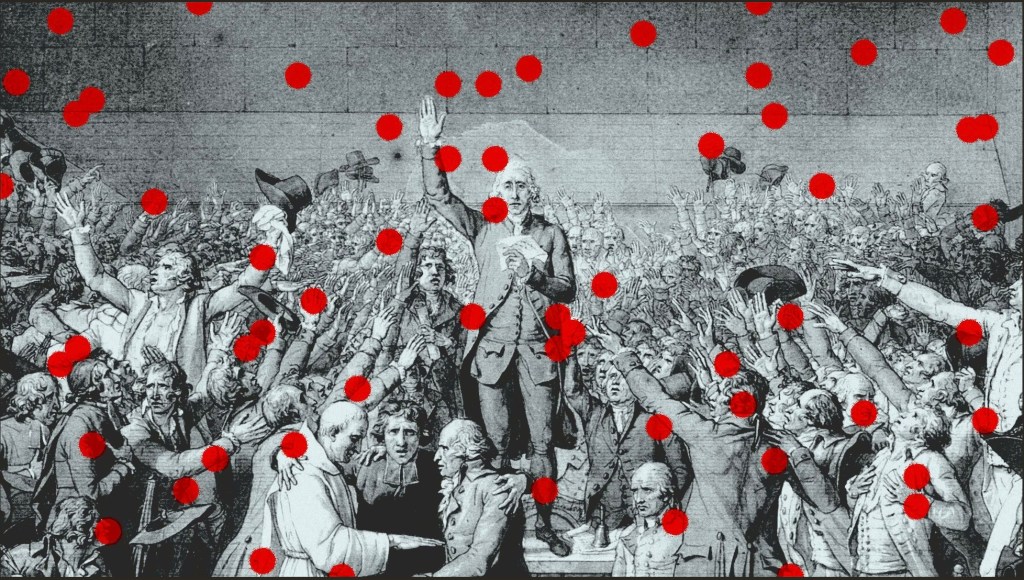
Paradise is dependent on youth questioning and creation. As I walk the streets of neighboring towns, I often look for hope. A young woman wearing her natural hair, sporting a t-shirt with the slogan “Free My Mind,” makes me smile. Young people freely using myriad pronouns to acknowledge a spectrum of genders gets my attention. The Parkland students inspiring nationwide protest against gun violence in schools sparks my excitement. The young working-class man conveying he is “a fan of a certain nineteenth-century German philosopher and economist” warms my heart. From the street to the statehouse, when I see young people doing their own thing, I can only think, “Yes, kids, it’s time to go!”
Sound + Vision: Love + D.A.I.S.Y. (The 1989 And Then Some Merona Sport Edition)
- Description Of A Fool (Groove Armada’s Acoustic Mix). A Tribe Called Quest
- Keep On Movin’, Soul II Soul
- Ghetto Thang, De La Soul
- Can You Feel It, Mr. Fingers
- Keep It Together (12-inch Mix), Madonna
- Voodoo Ray (Frankie Knuckles Paradise Ballroom), Frankie Knuckles
- Let It Roll, Doug Lazy
- Let The Music Use You, The Nightwriters
- Good Life, Inner City
- Monie In The Middle, Monie Love
- Pump Up The Jam, Technotronic
- No Way Back, Adonis
- Jump To The Rhythm, Chi-Ali
- French Kiss (Underground Mix), Li’ Louis And The Wold
- I’ll House You, Jungle Brothers
- Rock To The Beat (Featuring Ann Saudnerson), Kevin Saunderson & Reese
- Fantasy, Pleasure Zone
- Ride On Time (Massive Mix), Black Box
- Move Your Body, Marshall Jefferson
- Some Day, CeCe Rogers
- Like This (Featuring K-Joy), Chip E,
- Back To The Beat (Club Mix), The Todd Terry Project
- Miss You Much(Oh, I Like That Mix), Janet Jackson
- Warning! (Zanzibar Mix), Adeva
- The Sun Rising, The Beloved
- Let Me Love You For Tonight (House Club Mix), Kariya
- Buffalo Stance (Arthur Baker’s Nearly Neu Beat), Neneh Cherry
- Your Love, Frankie Knuckles
- That’s How I’m Living, Tony Scott
- Doing Our Own Dang (Do It To The JB’s Mix), Jungle Brothers
- Ain’t Gonna Hurt Nobody, Kid’N’Play
- I’m Free (Terry Farley’s Boy’s Own Mix), The Soup Dragons
- Ladies First (Featuring Monie Love)(The 45 King Remix), Queen Latifah
- Mistadobalina, Del The Funkee Homosapien
- Love On Top Of Love, Grace Jones
- Doowutchalike, Digital Underground
- Step On (Twisting My Melon Mix), The Happy Mondays
- All Around The World(Extended Mix), Lisa Stansfield
- We Run Things (It’s Like Dat), Da Bush Babees
- Antoinette(I Got An Attitude), Hurby’s Machine
- All For One, Brand Nubian
- Funky Heaven, A Certain Ratio
- Can I Kick It?(Extended Boiler House Mix), A Tribe Called Quest
- Can You Feel It(Martin Luther King Mix), Larry Heard
- K Sera Sera, Justin Warfield
- Holding Back The Years(Extended Mix), Simply Red


Leave a Reply