During the Renaissance, Western European thinkers rediscovered the world of ancient Greece, simultaneously shaping the future of material culture while ignoring the thought production of myriad cultures and places beyond Europe. Philosophers of the period continued the Greeks’ ancient theory of color as a mixture of darkness and light. Literally, everything was black and white. Aristotle (384-322 BCE), correlating the elements and effects into his ideas about color, believed a crimson was a mixture of sunlight and darkness. Sir Isaac Newton (1643 -1727) expanded color ideas while observing prisms and rainbows. For Newton, colors were a spectrum of energies found in light and dependent on perception. Johannes Itten (1888 -1967), the famed teacher at the Bauhaus, expanded Newton’s use of energies, noting colors positively and negatively affect the viewer, and this effect was not dependent on the viewer’s awareness. Itten labeled colors cool or warm to describe color interaction. Josef Albers (1888 – 1976) furthered Itten’s ideas, stating that colors continually were interdependent and interacted. Studying these interactions enriches how we view art and images, influencing our meaning making. Literally, color was in the eye of the beholder.
Significant cultural, social, and technological shifts made the 1980s colorful. Color televisions occupied prominent real estate in most American houses now hosting the expanded cable TV offerings. Many TVs now had Atari and Nintendo game systems promoting brightly colored cubist graphics that brought the neon technology of the video arcade into the living room. The minimalism of the 1970s did not correspond with the excess and hedonism of the 1980s. Americans felt bold as the post-1970s economy subsided, with inflation slowing and unemployment declining. Graffiti and pop art found expression in and outside of museums and galleries. The Memphis Design movement rejected the sleek forms of brutalism and heralded bold and primary colors. Synthetic materials and dyes echoed this shift in textile production. From the television to the runway, there was a visually vibrant atmosphere. We were painting the town red, tickling each other pink, and, quite literally, showing our true colors.
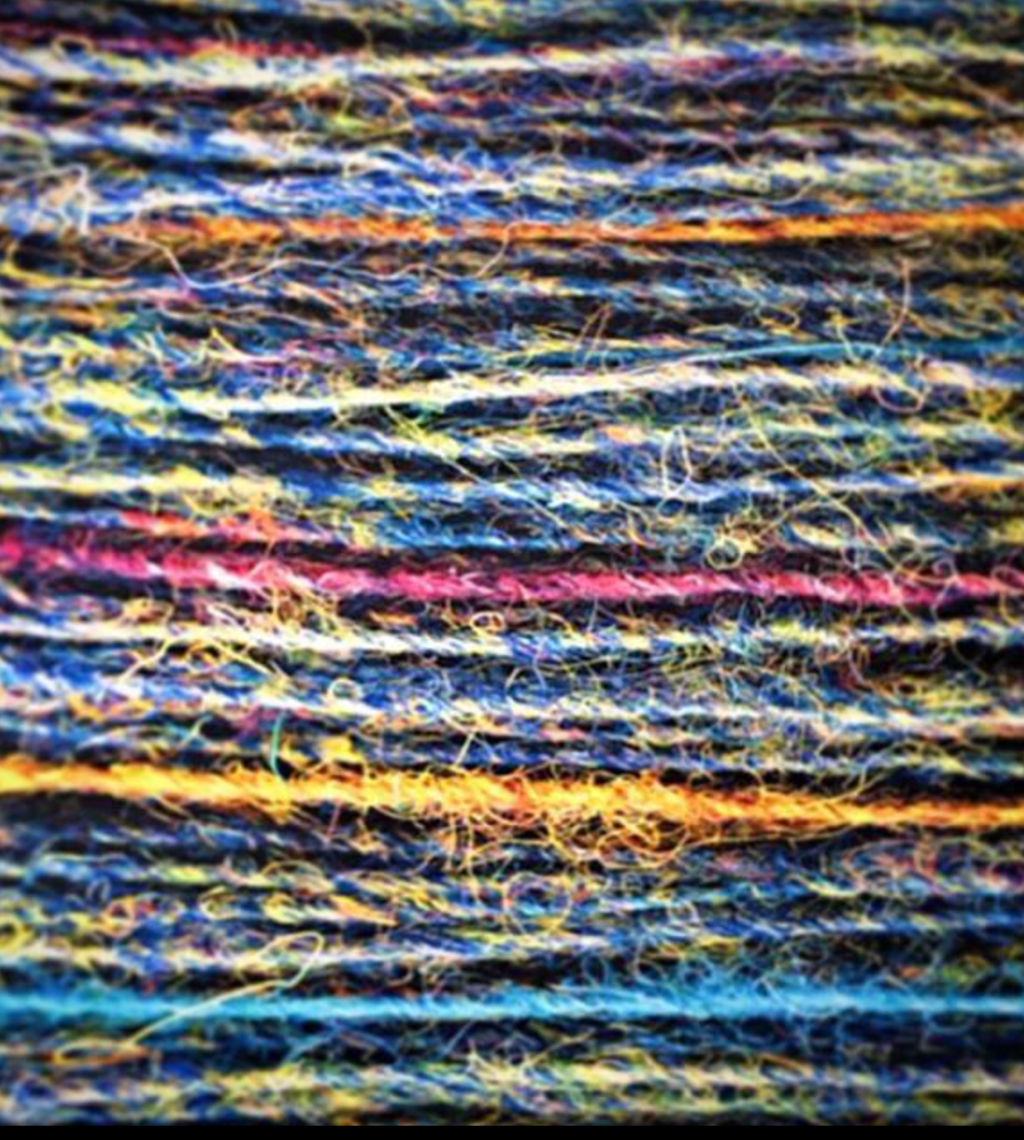
By the fall of 1981, Alexander Julian’s success was grounded in his primary use of color. Julian started with a small family men’s store in Chapel Hill, North Carolina. The ambition of the era fueled his move to New York City, where he launched the Alexander Julian Collection and was awarded a Coty Award before he was 30. The collection highlighted many bespoke features in men’s suits with tailored fitting and functional sleeve buttons for its made-to-measure and ready-to-wear lines. Although these were groundbreaking, the most distinctive feature was the in-house designed textiles that often weaved together more than 20 varying colorful threads in a single fabric. Julian carried these ideas and practices into his bridge line, Colours by Alexander Julian. The thick textures, tailored silhouettes, and the designer’s trademark use of pattern and color offered a signature look at a mid-tier price.
Soon, Julian’s Colours line was everywhere, representing a new phase in traditional American sportswear. From New York’s Saks Fifth Avenue to Los Angeles’s J.W. Robinson’s, Colours by Alexander Julian ushered in tweeds with subtle flecks of ruby and orange. Argyle sweaters boasted oversized triangles in royal blue, teal, and chartreuse. Julian’s button-down shirts wrapped his preppy lad in carefully placed stripes in a spectrum of pinks. Quickly, the hunter green and navel label with yellow stitching displaying “Colours by Alexander Julian” was on the backs of millions of American men and on the shoulders of one of the 1980s most visible television icons: Alex P. Keaton.
Family Ties was an N.B.C. sitcom running for seven seasons from 1982 to 1989. The show paralleled the United States’ shift from the social liberalism of the 1970s to the political conservatism of the 1980s. In a subverted tale of teenage rebellion, Alex P. Keaton, the son of former flower children Elyse and Steven Keaton, diverges from his parents’ values by becoming a Reagan conservative. Alex clutches tightly to a Wall Street Journal, believes in the power of the market, decries nonprofits, and lampoons the social safety net. Alex’s wardrobe exclusively highlighted each season’s offerings from Colours by Alexander Julian. He sported multiple shades of purples, a spectrum of royal blues, and a range of pinks and burgundies. The hand-knit sweaters were bold and vibrant, and the politics were repressive and dark.
By the show’s final episode, the cultural shift is complete. Alex graduates from a fictional elite university and secures a high-paying job at a Wall Street investment job, requiring him to leave the family home in Ohio and relocate to New York. When Alex’s ride to the airport arrives, goodbyes with the family are emotional, and Alex and his mother, Elyse, are cast in a strident dichotomous stance. Elyse, representing the social promises of the past, is left behind and nostalgic in the home. Alex, embracing the Reagan-era ideals, ventures off, certain an individual’s status and wealth are the best accessories in a young man’s life. The death knell of liberalism occurs a few episodes earlier when the Keaton’s Black neighbors, Gus and Maya Thompson, have their house vandalized because People of Color would devalue the all-white neighborhood. The Thompsons would have to fight, while Alex would easily coast to success. The 1980s solidified an ugly truth about the United States: The American Dream is exclusively white. People may have had adventurous and brilliant colors in their clothes, but society was still drawn in black and white.
Colours by Alexander Julian sweaters, sports coats, shirts, and ties were a regular part of my sartorial expression during my teenage years. By 1988, I began wearing these pieces differently, juxtaposing the uniform neatness of Alex P. Keaton and the young Republicans. The oversized sweater collars were decorated with safety pins and covered plaid shirts in clashing hues. The ties served as belts and scarves, while sport coats were decorated with vintage military medals, antique brooches, and numerous buttons exclaiming youth discontent. Shirts and cardigans were rarely buttoned, exposing my audio fixation of the moment. Argyles in teal, pink, and chartreuse coddled my Joy Division and Jane’s Addiction t-shirts. The end of the decade had a different tenor than the shining optimism of the New Romantics of the early 1980s.
Ronald Reagan gained traction by exploiting the fears of the 1970s financial crisis. Borrowing from John Winthrop’s speech of 1630, Reagan’s campaign and election speech proclaimed that in 1980, America should be a “shining city on a hill.” He blamed contemporary society’s economic and social woes on President Lyndon B. Johnson’s Great Society programs initiated in the 1960s. Reagan’s antidote promoted aggressive anti-communist foreign policy, traditional family values, and a trickle-down market approach known as “Reaganomics.” The administration deregulated the financial, transportation, and telecommunication industries, restructured the tax codes to benefit the wealthy, and slashed the social safety net.
Toward the end of the Reagan administration, America was grappling with the AIDS crisis, a crumbling urban landscape, the war on drugs, and a substantial poverty rate. Citizens were dying, experiencing economic hardships, and witnessing social injustices. People wanted a change, and 1988’s presidential election seemed like a shift would occur with the frontrunner, Massachusetts Governor Michael Dukakis. Approaching September, Dukkakis had a substantial lead over his opponent, the Reagan vice president and acolyte, George H. W. Bush. September 21, 1988, altered the course of the election when the Americans for Bush aired “Weekend Passes,” a political advertisement featuring William Horton. William Horton, a convicted criminal, had committed further offenses while participating in the Massachusetts Furlough Program. The ad, referring to Horton as “Willie,” showed Horton’s mug shot while displaying the words “kidnapping,” “stabbing,” and “raping.” Horton was a Black man, and that was a threat to white America. Al Gore mentioned the incident in the Democratic debates, Bush reiterated the case during the national debates, and Lee Atwater, Bush’s campaign manager, commented, “By the time we’re finished, they’re going to wonder whether Willie Horton is Dukakis’s running mate.” Although no one discussed the racial component of the ad, a clear racial dog whistle sounded in television ads and on the debate stage, shifting the election. Bush won by securing 53.4% of the popular vote and more than 400 electoral votes, ensuring the continuation of the Reagan-era policies.
There is no direct correlation between the racial dog whistle of the Bush campaign and the Family Ties episode featuring the racial violence against the Thompson family, but clearly, Black America had a pronouncedly different structural reality. This existence was detailed in the rap music of the late 1980s. Boogie Down Productions featuring KRS-One documented the harsh reality of living in the South Bronx. Long Island’s Chuck D. and Flavor Flav headed Public Enemy and detailed the social realism of the Black experience with 1988’s It Takes A Million To Hold Us Back. On the West Coast, N.W.A. described the harsh life of Compton, earning widespread attention for their debut album and a Parental Advisory sticker. Ice T provided discourse about life in South Central Los Angeles, noting Echo Park and West Lake were worlds away from Bel Air and Brentwood.
Ice T’s first charting single was the title track from the 1988 film Colors. Almost two decades after Easy Rider, Dennis Hopper depicted gang life and police presence in South Central Los Angeles. Because the rapper grew up in Southern Los Angeles, he was perfect for the soundtrack. Ice T provided an ominous pedal tone layered with police radio communications as the foundation for the track about gang life. His lyrics detailed a societal reality simultaneously caused and ignored by Reagan-era policies. Friends getting jacked, mothers smoking crack, and a sister’s arm lined with needle tracks are the tell-tale signs of a profane existence. The rapper’s most poignant line comes at the beginning of the second stanza, where Ice T states:
You don’t know me, fool;
You disown me, cool.
The United States continually ignored the existence and experiences of Black Americans, dismissing any complaint as a failure of personal ability and determination. Color was your primary physical association with a gang, the only way of belonging. Colors are essential, and Ice T reiterates this by repeating the word more than 130 times in the track. Red, yellow, green, and blue were the bold colors describing Los Angeles, and rappers were dropping rhymes describing the gritty details of life in Black America.
In 1988, another national display of colors occurred in Washington, D.C., where 8,288 panels of the AIDS Memorial Quilt were laid out on the Ellipse in front of the White House. Each panel was three by six feet, paralleling the approximate size of a human grave and representing the lives of people lost to the AIDS epidemic. In 1981, young and healthy gay men in urban centers were becoming extremely ill and dying of unusual symptoms associated with auto-immune diseases. The illness was referred to as the “gay plague” until it was defined as AIDS in 1982. As the decade progressed, the death of gay men to AIDS skyrocketed. The overwhelming loss and grief fueled the gay community’s creation of a memorial to those lost to the disease. Cleve Jones, the activist responsible for the project, commented that friends, lovers, and family members utilized discarded castoffs, remnants, and different colors to create something beautiful, helpful, and loving.
During the Reagan Era, queer people with AIDS were indeed cast off and disowned. Reagan did not say the word “AIDS” until 1985, when he was pressured by a journalist. Earlier in the year, the administration rejected the Center for Disease Control’s first AIDS prevention plan. Under pressure, the Reagan administration finally took action in 1987, appointing a committee to investigate the epidemic. By this point, H.I.V., the virus causing AIDS, infected 47,000 Americans. Reagan and Bush never acknowledged the quilt in front of the White House, and although the AIDS Memorial would receive global attention and a Nobel Peace Prize nomination, an American President would not visit the display until 1996.
The Josef Albers Homage to the Square in yellows, oranges, reds, and pinks that hangs in our library is constantly in dialogue with my favorite cardigan from Colours by Alexander Julian. Albers and Julian shared a passion for color, knowing its critical place in creation. Learning from these artists, we glean that color is never hierarchical but relational. Color has incalculable faces and multivalent appearances. When we genuinely grapple with seeing color and understanding its interaction and power, we will truly understand ourselves and our world.
Under the auspices of a college visit, I was in Chapel Hill on December 1, 1988. The Thursday evening air was sharp, producing misty clouds with each breath. A fake I.D. and staircase invited me to an upstairs lounge where bass amplified through walls barely covered in peeling paint and bodies writhed and jumped on a wooden floor. My oversized sweater in argyles of teal, pink, and chartreuse openly swayed, revealing the Talking Heads t-shirt accented by pinks and blues. “I’m Marcus.” His taupe shirt was decorated with lilac triangles and squares, fastened to his chest with crimson suspenders, elongating his form from the waist of his pleated jeans to the peak of his hi-top fade. Dancing never requires talking; it involves connection. Our bodies were close together, synchronously moving down, over, in and out. The dance floor crowd, mostly men with a few women in various states of dress and undress, unconsciously performed, mixing, moving, and melting into each other. Shoulders dipped, hips bumped, legs twisted, hands clapped, arms raised, and feet kicked. Under the flashing lights, the colors bounced and blipped with electricity that shocked the pinks and oranges into new life. Yellows gleamed, blues glowed, whites electrified, and blacks radiated. The jumping, clapping, and stomping escalated until the crowd broke the silence, singing, “Sisters, brothers, we’ll make it to the promised land.”
Sound + Vision: Colors, Colors (The 1988 Alexander Julian Edition)
- Colors, Ice T
- Wishing Well, Sananda Maitreya
- Talkin’ All That Jazz, Stetsasonic
- Need You Tonight, INXS
- Mercedes Boy, Pebbles
- Ease Back, Ultramagnetic MC’s
- Straight Outta Compton, N.W.A.
- Bring The Noise, Public Enemy
- Push It, Salt-N-Peppa
- I’ll House You, Jungle Brothers
- Promised Land, Joe Smooth
- I Wanna Have Some Fun (Sample Some Fun Mix), Smantha Fox
- (Nothing But) Flowers ,Talking Heads
- A Little Respect, Erasure
- Every Little Step (Extended Version), Bobby Brown
- Domino Dancing, Pet Shop Boys
- MC Lyte Likes Swingin’, MC Lyte
- Ain’t No Half-Steppin’ Big Daddy Kane
- My Philosophy, Boogie Down Productions
- I’m Not The Man I Used To Be(Jazzie B Remix), Fine Young Cannibals
- Hallelujah (Club Mix), Happy Mondays
- Carolyn’s Fingers, Cocteau Twins
- Janes Says, Jane’s Addiction
- Birthday, The Sugarcubes
- It’s All In The Game, Carmel
- Teenage Love, Slick Rick
- The Rainbow, Talk Talk
- Sweet Jane, Cowboy Junkies
- The Night I Heard Caruso Sing, Everything But The Girl
- Never Gonna Give You Up (Pianoforte), Rick Astley
 The Last Boudoir in Angier
Leave a comment