Her steps on the stairs sounded different and pronounced, and quick thuds replaced her regular, light, precise movements. The door to the basement slammed, and she yelled, “No Go!” By this time, my parents stood around Sareena, puzzled by her heavy breathing and body barricading the entrance to the basement. Sareena had worked for my mother for several years and often entered the house through the basement, as was the custom for my family. The short walk to the stairs highlighted my parents’ meticulously organized tools, holiday decorations, and bulk supply of toilet paper and Duke’s mayonnaise. Now, a stout body panting heavily barred entrance to these treasures.
“Lord, what’s wrong,” my mother asked as she placed her hand on Sareena’s shoulder. Her eyes moved back and forth while her breath began to slow. My dad handed her a glass of water.
“Down there . . .” Her words trailed off. She looked at us all again before uttering, “zorro.”
The silence fell on us all.
“Zorro?” My dad asked before continuing, “Zorro. There’s a man downstairs.”
Sareena’s face betrayed that her fright was becoming frustration, and she slowed her speech, punching each syllable of the word. “Zor-ro.”
We had nothing.
“Zorro . . .you know,” and she moved her hands to the top of her head, mimicking ears while she cocked her head back and forth.
“Mouse,” exclaimed my dad.
“Ratón. No. Much bigger.”
“Alligator!” My mother was enthusiastic about her guess while we wondered about a taxonomy in which mice were akin to alligators.

My father signaled he would investigate, opening the door to the basement slowly. His steps on the stairs were quiet, measured, and paced evenly. Behind him, we crept equally as carefully, walking gingerly to avoid any creaking. The basement garage door was open, and the outside light filled the first half of the basement. My dad stopped carefully and fixed his gaze on the spot where the light began to dim. Slowly, he turned to his entourage, frozen in time, and began pointing to the corner.
The creature’s lean body stretched upwards from resting on its hind legs to a slight turn of its head, looking toward the light coming from the open door. The darkness of the fur on its leg became lighter, reaching the body, displaying a tuft of white beard. The reddish-orange fur encapsulated its body, and when the sun lit the fur, it seemed to glisten. It was still, gazed fixed toward the open door.
Breaking our frozen posture, Sareena took a slight step, and the silence was broken with a faint creak. The creature quickly jolted its head, finding its scan met with four looming images. This brevity held a connection, eye-to-eye, between the creature and humans, making the distinction between resident and intruder unclear. The stasis was interrupted when the regal stance transformed into a blur of red, daunting out the open door.
My mother turned to Sareena and sighed in a way that conveyed more than words to her friend. “Ahhhh well, zorro is fox.” We all turned to make the journey up the stairs, and she repeated herself, “Zorro is fox.”

The fox has fascinated humans since the advent of recorded history. Ancient Egyptians depicted the fox as a musician, guardian, and servant. Native American tribes like the Achomawi have an origin story featuring the fox as the creator of the universe. The Greeks and Romans portrayed the fox as a trickster who often outsmarted larger and more threatening animals. In Korea and Japan, the fox appeared as a divine creature with a cunning wit and the ability to transform into a beautiful woman capable of defeating maniacal male counterparts. Eastern European tales depict the fox as a clever and wise assistant, offering human colleagues support in an epic quest or help during perilous dangers.
Modernity has been equally enthralled with the fox with numerous representations in art, literature, film, and music. Winslow Homer’s Fox Hunt borrows from Japanese woodblock prints, highlighting the fox’s perspective during a hunt, and Franz Marc painted The Foxes in abstract form, harmonizing the colors of the animal’s fur. Beyond folktales, the fox has been the protagonist in Roald Dahl’s Fantastic Mr. Fox, Antoine de Saint-Exupéry’s The Little Prince, and poet Ted Hughes’s “The Thought-Fox.” Bette Davis captivated audiences in the 1941 cinematic adaptation of Lillian Hellman’s play, The Little Foxes. Disney Studios animated Daniel P. Mannix’s The Fox and The Hound, featuring Tod the Fox as one of the central protagonists. Most memorable is the kitsuné wedding in Akira Kurosawa’s 1991 film Dreams. The fox was found to be prominent in folk music and popular music, with tracks from Elton John, Nas, and Kate Bush. In 2013, the Norwegian duo Ylvis, dressed in fox costumes, sang “The Fox (What Does the Fox Say?).” Throughout time and culture, the fox is sly, wise, witty, cunning, and transformative.
Metamorphosis and shrewd would aptly describe teenagers Gildas Loaëc and Masaya Kuroki. Kuroki relocated to Paris from Tokyo after his parents’ divorce in the 1990s. The transition from Asia to Europe during the preteen years required a swift acclimation of language and culture. To ease the pressure from a changing family dynamic and adjusting to a new place, Kuroki sought solace in music. Gildas Loaëc left the suburbs of West Paris for the city center at age 19 and opened Street Sound, a unique record store catering to the varied tastes of the city’s DJs. The store attracted a variety of musicians, including members of Daft Punk and Phoenix. After a gap year studying street culture in New York City, Kuroki returned to Paris and began studying architecture at Ateliers Jean Nouvel. To supplement his income, the young student began working at a vintage clothing store next to Street Sound, visiting the shop often and building a friendship with Loaëc.
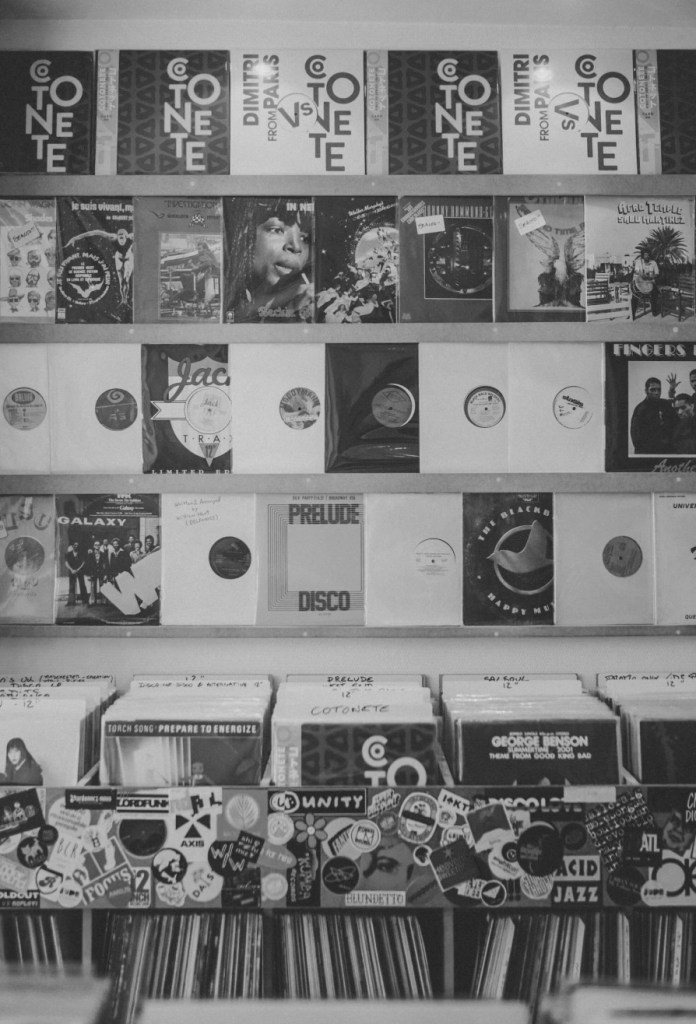
Although Loaëc’s Street Sound store had become a cultural hub, it was not turning a profit. Daft Punk’s career escalated, and the duo invited Loaëc to join them as the new label’s manager. When the music group wanted to make an anime film in Japan to coincide with their upcoming release, Discovery, Loaëc enlisted Kuroki, fluent in English, French, and Japanese, to assist. The result was twofold: Primarily, Daft Punk created Interstellar 5555: The 5tory of the 5ecret 5tar 5ystem, and as a byproduct, Kuroki and Loaëc formed a strong creative bond.
Kuroki and Loaëc enjoyed their time together exploring the street fashion of Paris and Tokyo, devouring the French house scene of the late 1990s and early 2000s, and taking cues from lifestyle artists such as Nigo, designer of A Bathing Ape and Billionaire Boys Club. The two began to wonder if they could build a creative venture around their shared interests in music, clothing, and culture. In 2002, they began producing and releasing music and offered a small capsule clothing collection featuring a polo, a cardigan, and a pair of jeans. Momentum was built, and a symbiotic relationship evolved where music influenced the creation of clothing, and clothing influenced the creation of music. The pair began DJing to promote their clothing. Then brick-and-mortar stores appeared. Next, a coffee shop connected to their boutique became a place where the fusion of fashion, music, and street culture was synthesized. The brand became Kitsuné, the Japanese word for fox. Cafe Kitsune, Musique Kitsuné, and Maison Kitsuné soon became the fusion of Japanese street style, French prêt-à-porter, and international jet setting with a loyal fan base.
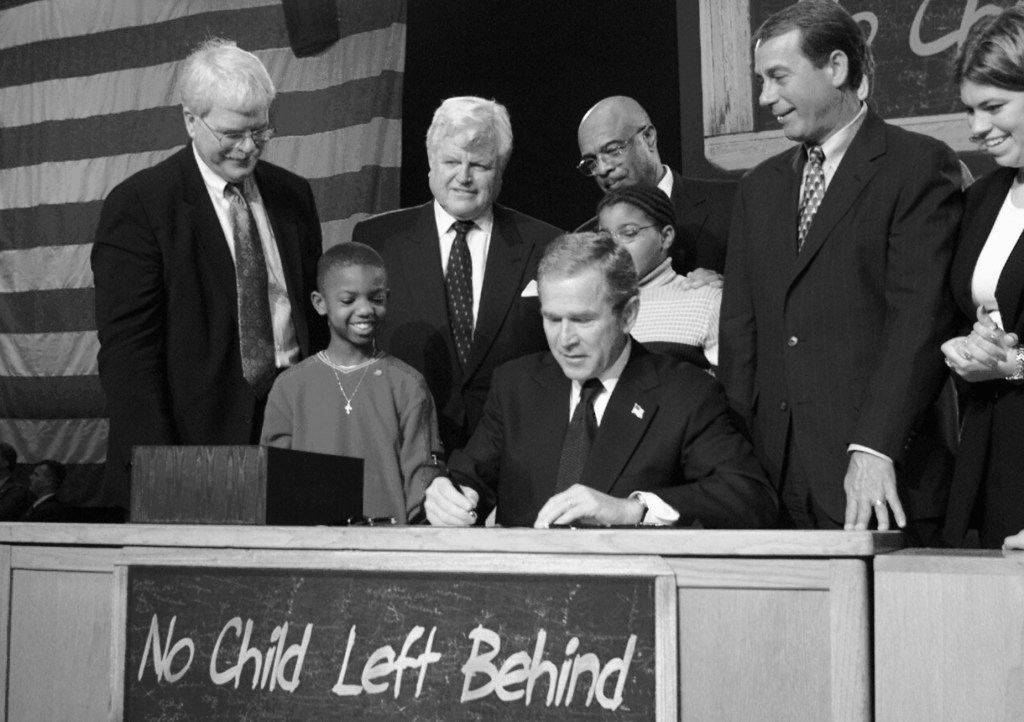
While 2002 saw a phenomenal amalgamation of art, music, and culture in Parisian youth culture, students in the United States were experiencing the polar opposite when George W. Bush signed the No Child Left Behind Act into law on January 8th. Public education was one of the focal points of Lyndon B. Johnson’s Great Society, and in 1965, Johnson signed the Elementary and Secondary Education Act (ESEA) into law. The act provided primary and secondary schools with federal money for the expansion of academic programs, professional development, parental involvement, and instructional resources. Although the law was instrumental, it was often underfunded, falling short in its goal to bolster public education. The Reagan administration paved the way for radical change by publishing A Nation At Risk in 1983. The report suggested that the economic enterprise of the country would be compromised unless there was educational reform with universal academic standards that were expected of all students. The Clinton administration renamed the ESEA GOALS 2000 Act and began emphasizing the sole importance of math and reading. By the late 1990s, a global emphasis on accountability in education by organizations like the World Bank, the Organization for Economic Cooperation and Development, and the United Nation Educational, Cultural, and Scientific Organization coupled with George W. Bush’s campaign promises for unilateral educational reform to make wide-ranging changes to public schools imminent.
Bipartisan support championed the transformation of public education, and No Child Left Behind would significantly alter American schools. While The Great Society programs and ESEA would support schools with federal money, No Child Left Behind had a different approach, correlating school funding with academic achievement. The act mandated standards-based education with year-end assessments measuring student outcomes. While the federal government required standards, it did not set national benchmarks and left each state to determine the requirements and measurements.
No Child Left Behind also drastically changed the way lower-performing schools received funding. At-risk schools have been a historical byproduct of how education is funded in the United States. Public education is primarily tied to state and local budgets, with each providing 45% of a school district’s fund. The federal government contributes the final 10%. State and local governments rely on taxes for revenue, and property taxes become the most significant financial resource for education. With the majority of school funding being based on property taxes, an inequitable distribution of money for public education is a reality. Neighborhoods with higher-value homes and land will have more money for local schools, increasing their spending-per-student allowance. Communities with lower property values will have fewer resources for education, thus decreasing the spending-per-student money.

The inequity is not only an issue of social class in the United States but an issue of race. People racialized as white have never had historical restrictions like racially restrictive covenants and redlining often faced by People of Color. Being segregated into less desirable geographical spaces with lower land and property values limits resources for many social programs supported by local taxes. Lack of resources perpetuates lower-performing schools. Addressing historically underachieving schools, No Child Left Behind did not provide more resources to cover the disparity in financial support but instead emphasized Adequate Yearly Progress (AYP) as the stipulation for receiving funding. AYP was determined through annual testing results that were to show an annual increase in reading comprehension and math skills. Schools unable to demonstrate AYP were subjected to rigorous steps to improve test results; they were not provided additional resources. If a school failed to achieve AYP for multiple years, the school was subject to losing funding and ultimately facing restructuring by a private-public partnership, reorganizing the school into a charter school.
With AYP solely based on math and reading scores, subjects not falling into these domains suffered. Instructional time was dedicated to improving scores, underscoring the value of math and reading while devaluing other subjects like art, music, history, language instruction, and social sciences. By 2007, 71% of schools had increased math and reading instruction, taking the time from non-tested subjects. The importance of various domains of studies has been argued successfully throughout time, noting a fuller human experience is enhanced by exposure and knowledge of various schools of thought. Twenty years after No Child Left Behind, the average American school student was grossly unaware of history and negligently ignorant about the structure and operation of the U.S. Government. The U.S. Department of Education noted that in 2023, only 13% of American eighth graders were proficient in history, and 22% had a working knowledge of civics.
Like Reagan’s A Nation At Risk, No Child Left Behind had an economic motive. Demonizing the arts, history, and civics parallel national rhetoric measuring job readiness. Academic subjects were judged not on their merit to create a stronger society but on their ability to transfer into the marketplace. If a desired field of study was deemed insignificant to a profit margin, then it was likely to be eliminated from the curriculum and place of study in secondary and post-secondary education. By 2011, 48% of California schools had cut instructional time in art, music, and theater. A new wave of cuts is eradicating courses of study across college campuses. Economic production has usurped civic preparedness and human enhancement as a national priority in education.

No Child Left Behind did not live up to its name or its promise to significantly increase student achievement in math and science. There is no successful data stating that the No Child Left Behind scores increased or closed the opportunity gap. National scores trended higher before President Bush signed the act into law, and No Child Left Behind has maintained the same trajectory. The data shows that at-risk and underserved students had more significant gains in math and reading before No Child Left Behind. We do have data correlating public school closures and charter school enrollment after No Child Left Behind. Francis A. Pearman of Stanford University noted that 1,000 public schools close annually, with the majority of these schools being in predominantly Black and Brown neighborhoods. Charter School enrollment has increased exponentially, taking money from public education and ciphering it into private-public partnerships. In North Carolina, charter school openings have exceeded 200, educating over 138,000 students.
The intention of No Child Left Behind is impossible to judge since we only have the political rhetoric utilized to pass the law. Data from the Organization of Economic Cooperation tells us performances in math and reading have not improved, remaining stagnant or declining yearly. Asian, Scandinavian, and Asian countries continue to make advancements in math. Data also lets us see how money, once designated for public education, has been funneled to charter schools. In North Carolina, less than $20 million annually was allocated to charter schools. As of last year, $985 million in the state budget was taken from public education to supplement charter schools. Diane Ravitch, Assistant Secretary of Education in the Clinton and Bush administrations, has called No Child Left Behind “The Death Star of American Education,” noting that it promoted an obsession with testing, narrowing the curriculum, the demoralization of teachers, gutting of public education, and enormous profits for educational testing companies. The policy was extended and buttressed with the Obama Administration’s follow-up, Race to the Top. Ten years after the dreadful policies, there was a mass exodus of professionals in education, and enrollment in the profession plummeted. Not only did the policy leave children behind, but No Child Left Behind allowed American public education to be outperformed, outspent, and outfoxed.
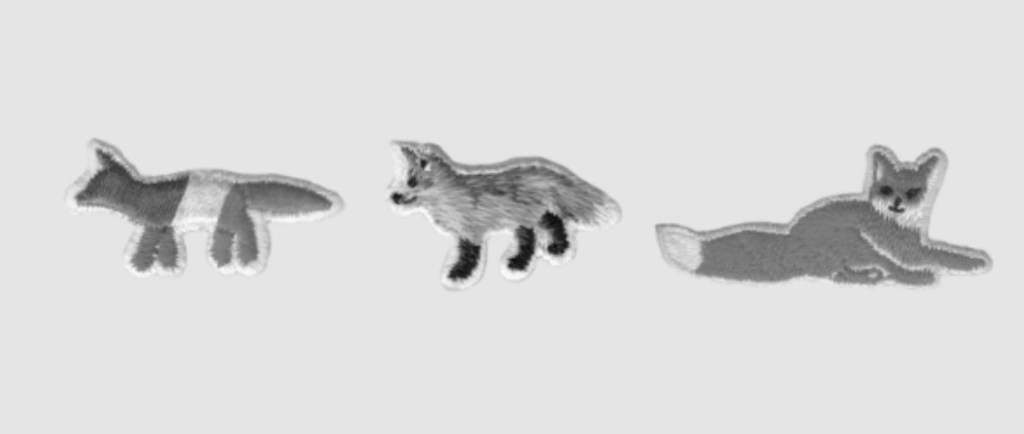
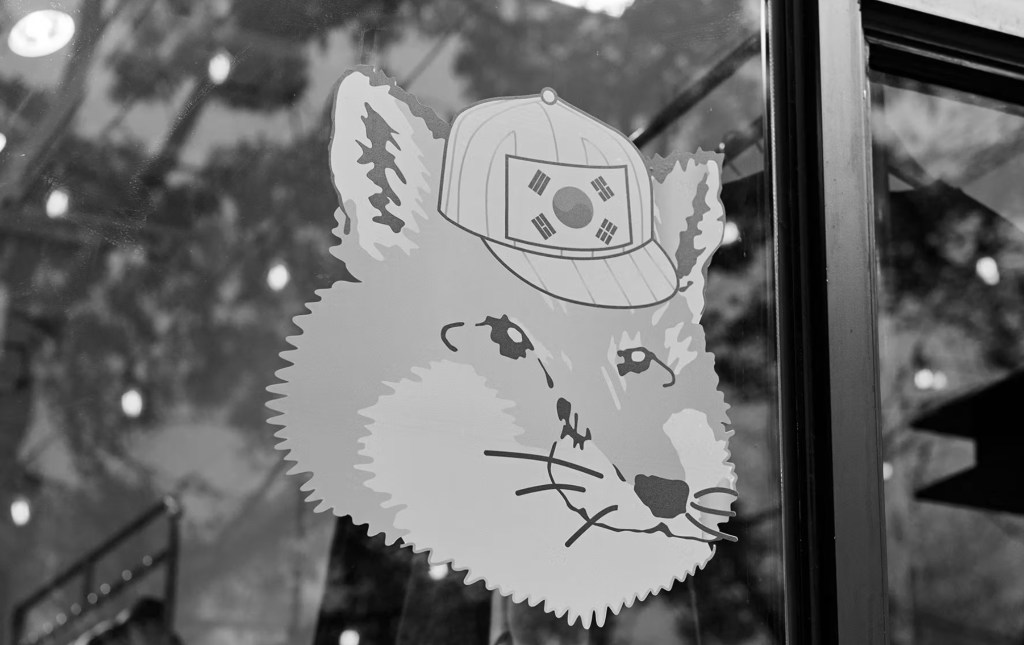
Gildas Loaëc and Masaya Kuroki have placed the mythical fox as the vital logo of Maison Kitsuné. Like the transformative and agile creature, the brand’s style can adapt to a rapidly changing culture. The clothing continually draws inspiration from Tokyo and Paris, the hometowns of its creators. Parisian tailoring and fashion meld with Japanese street style and innovation to produce well-made designs. The brand has expanded, operating 38 directly owned stores across the world, including Paris, New York City, Tokyo, Seoul, Beijing, and Los Angeles. Emerging music from electronic to hip hop brings artists from around the world on to the Kitsuné music label, and Café Kitsuné operates 18 cafés in iconic locations around the globe. Akin to Ralph Lauren’s horse and Lacoste’s crocodile, Maison Kitsuné’s fox has become a desirable emblem in the world of fashion.
The fox will continue to fascinate people for generations to come. The creature’s beauty and agility combine with centuries-old myths, making it both mysterious and elegant. Mischief and trickery add a humorous component when the creature is often anthropomorphized in film, literature, and music. Roald Dahl captured and synthesized all these qualities in his book, Fantastic Mr. Fox. Mr. Fox often tells his family that he needs the world to think he is “quote unquote, fantastic.” Toward the end of the book, after the main character saves his family and friends from the industrialists Boggis, Bunce, and Bean, his wife turns to him and says, “You Really Are Kind Of A Quote-Unquote Fantastic Fox.” I couldn’t agree more. The fox is genuinely fantastic.
SOUND + VISION: Foxy (The 2002 Maison Kitsuné Edition)

This week’s playlist reconstructs the chic, the freaks, the street, and the potential found in the dreamers of Paris and Toykyo during 2002, found in the formidable fox of Maison Kitsuné.
- Aquanote, Nowhere (Crazy P’s Heatwave Mix)
- Mousse T., Fire (Shakedown’s Firehouse Mix)
- Lance De Sardi, Waterslide (Llorca’s Red Brick Remix)
- T Ski Valley, Catch The Beat (Dimi’s & Mousse T.’s Old School Mix)
- Solaris Heights, Midnight
- Mirage, You Know (I Like It)
- Kings Of Tomorrow Featuring Julie MC Knight, Finally (Kevin Yost’s Dubified remix)
- Phunk Investigation, Be Good (Club Mix)
- Mekkah, Race Of Survival (Vocal)
- Sweet Female Attitude, Flowers (Solomon’s Precious Mix)
- Deep Dish & DC Depressed, Come Back (Soft’s Flashback Mix)
- Jamie Lewis & Michelle Weeks, The Light (Jazz-N-Groove Primetime Dub)
- Inaya Day & Louis Benedetti, Shout It Out (Vocal Mix)
- Jay-J & Chris Lum With Latrice, Without Love
- Kaskade, It’s You, It’s Me (Marques Wyatt’s Deep Interpretation Remix)
- ANdy Caldwell, I Can’t Wait (Original Flavor Mix)
- Pierre Cavert, Solar Funk
- Audio Soul Project, Community
- Afterlife, Sunrise (Roger Sanchez Mix)
- Blue Six, Music And Wine (Speakeasy 3000!)
- Atjazz, Touch The Sun (DZihan & Kamien’s Sun Care)
- Kyoto Jazz Massive Featuring Maiya James, Mind Expansions (Waiwan Vocal Mix)
- Lisa Shaw, Let Ir Ride (Jimpster Remix)
- Crazy Penis, Baby We For Real
- Felix Da Housecat, Madame Hollywood
- Röyksopp, Remind Me
- Tiga, Hot In here
- Modjo, Lady
- Kylie Minoque, Love At First Sight (Ruff & Jam US Radio Mix)
- Daft Punk, Digital Love
- Phoenix, If I Ever Feel Better
- Fannypack, Hay Mami
- Eminem, Without Me
- DJ Assault, They Clown You
- Angie Stone, Wish I Didn’t Miss You
- Craig David, Fill Me In
- Blackalicious, Make You Feel That Way
- Paul Oakenfold Featuring Shifty Shellshock & Crazy Town, Starry Eyed Surprise
- Amerie, Why Don’t We Fall In Love
- People Under The Stairs, Empty Water Bottles
- City High, Caramel (Saqib Remix)
- Missy Elliot Featuring Jay-Z, Back In The Day
- Mary J. Blige, Family Affair
- Ludacris Featuring Nate Dogg, Area Codes
- Erykah Badu Featuring Queen Latifah and Angie Stone, Love Of My Life Worldwide
- Nelly, #1
- Trina Featuring Ludacris, B R Right
- Truth Hurts, Addictive
- Aaliyah, Rock The Boat
- Busta Rhymes & Mariah Carey Featuring Flipmode Squad, I Know What You Want
- Princess Superstar Featuring Kool Keith, Keith’n’Me
- 2Pac Featuring Mr. Biggs, Better Dayz
- The Streets, Weak Become Heroes
- The Cinematic Orchestra Featuring Fontella Bass, All That You Give
Listen on Spotify, YouTube, or Apple Music
 The Last Boudoir in Angier
Leave a comment