This week’s post contains events concerning mental illness and suicide. If you or someone you know is experiencing suicidal thoughts or a crisis, please reach out immediately to the Suicide Prevention Lifeline at 800-273-8255 or text HOME to the Crisis Text Line at 741741. These services are free and confidential.
Socko! In the 10th grade, my first English paper was returned with this word written in red ink across the top of the first page. There were neither offerings for correction nor a grade, just the word Socko. The following paper had the same red ink and an additional word, Boffo! These pronouncements followed me in every exercise during my sophomore year. My research papers were Socko. My short stories were Boffo. Occasionally, my poetic endeavors were Boffo Socko! The words were not solely reserved for indelible red ink on assignments but announced in class with surprising enthusiasm. “Boffo observation about Jordan Baker, tell me more!” In flowing skirts and blouses wisping around the room, my 10th-grade English teacher would pull her electric blue framed eyeglasses to the tip of her nose and praise students with a Boffo Socko.
Before the English course, my only brief encounter with the words was from the 1984 film, The Muppets Take Manhattan. Kermit The Frog, in an endeavor to promote Manhattan Melodies, tells a potential financier he has a “Boffo Socko script.” The words denoting superior and outstanding qualities first entered the popular lexicon in the1920s and were first found in a Variety article by R. Nichols in 1934. Quickly, the entertainment industry adopted a widespread use of Boffo and Socko to discuss outstanding box office performances. The terms did not remain isolated to the film studios and found a place in the youth culture of the late 1950s and 1960s, describing any superlative idea or phenomenon. By 1985, Socko and Boffo had found their way to a classroom at Hendersonville High School, where they championed student work.

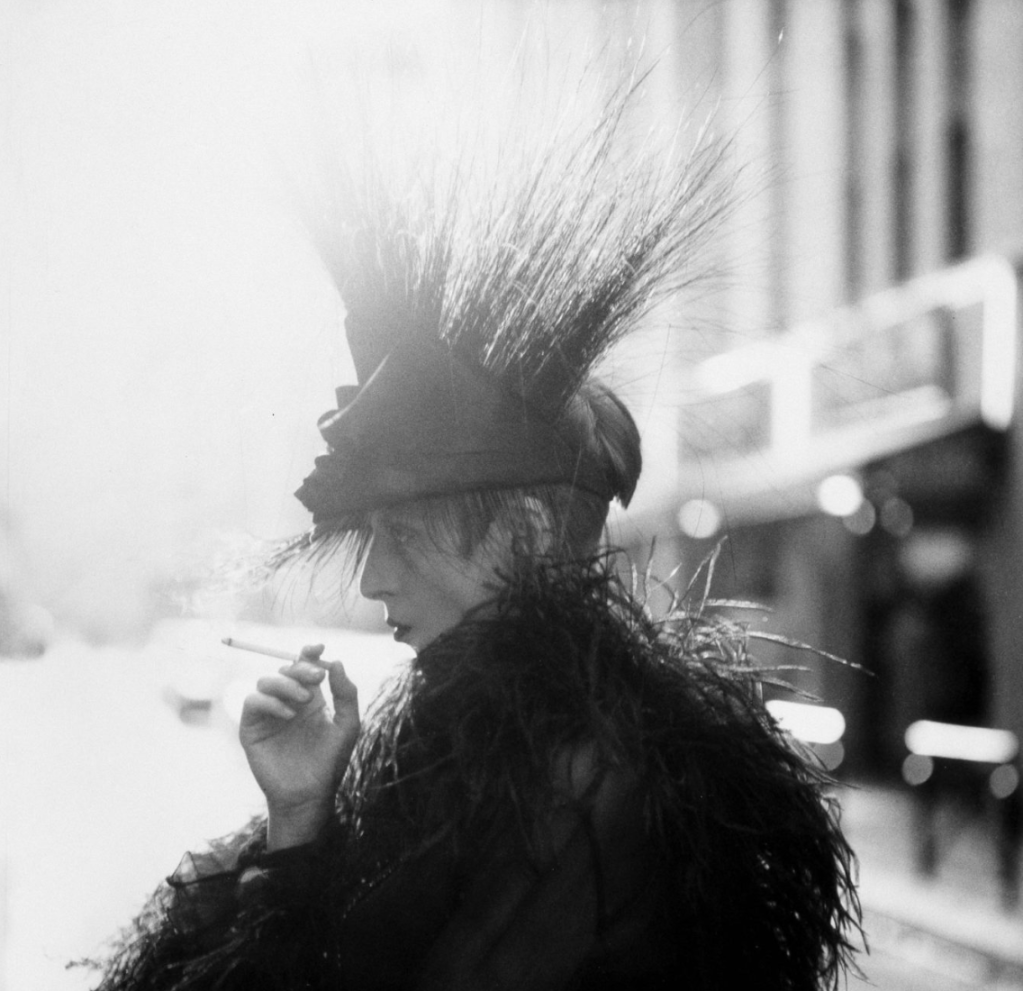
By the time Isabella Blow became the fashion director at Tatler, she was known as a benefactor to young talent. During her career, she fostered the careers of Stella Tennant, Georgina Chapman, Keren Craig, Honor Fraser, Plum Sykes, and Sophie Dahl. Blow’s journey to the world of fashion was not a direct course. Born into an aristocratic family, Blow experienced the repercussions of a gambling grandfather who had to sell the family’s 35,000-acre estate to pay off his bets. Lady Vera Delves Broughton, Blow’s grandmother, was an explorer, photographer, and hunter. She also left her indebted husband for the more substantial Walter Guinness, with whom she traveled, collaborated on books, and entered the lively society scene of Europe’s interwar period.
Blow’s formative years were not without significant tragedies. When she was four, her brother, Johnny, drowned in the family pool in the absence of a vacationing nanny. Recalling the event, Blow said:
I can remember everything about it. The smell of the honeysuckle and him stretched out on the lawn. My mother went upstairs to put her lipstick on. That might have something to do with my obsession with lipstick.
The family unraveled after the event, and by her teen years, her parents were living very separate lives while their remaining three daughters were boarding at Heathfield School. Divorce was imminent, and Blow was informed about the change in family dynamics by a very impersonal correspondence. When the daughters returned home, their mother organized a formal farewell, shaking her daughters’ hands before departing. When her father remarried, Blow was displaced, finding her room had been allocated to her new step-sister. Blow would remain estranged from her family, rarely seeing her mother. When her father died, she was provided with a penance from his substantial estate.
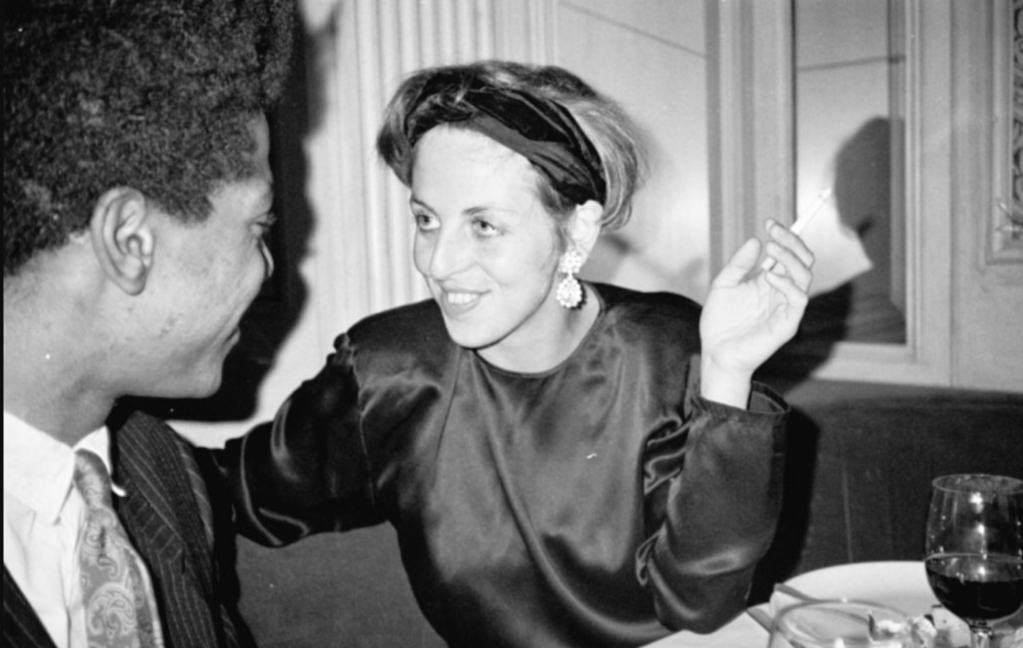
After Heathfield, Blow had a series of odd jobs before she headed to New York to study Chinese Art in the graduate program at Columbia University. Before long, Blow’s life began to move at a rapid pace. She worked at Guy LaRoche in West Texas, married Nicholas Taylor, divorced Nicholas Taylor, and returned to New York, where Bryan Ferry, Blow’s friend, introduced her to Anna Wintour. Wintour, the newly appointed creative director at Vogue, hired Blow as an assistant. Wintour and André Leon Talley baptized Blow into the world of elite fashion, and within a few months, Blow was cleaning her office desk with Perrier and Chanel No. 5. Her work at Vogue spilled over into the nightlife of NYC, and she became part of the avant-garde scene of the early 1980s, befriending Andy Warhol and Jean-Michel Basquiat.
By 1986, Blow returned to London, working as an assistant to Michael Roberts, the fashion editor at Tatler. Blow’s ability to source material and locations for editorials and shoots became widely known and praised within the fashion world. In an advertising-centered industry, Blow used her own story to enhance a visual medium. Her pictorials were gothic, sculptural, and grand, depicting heroes in gothic, sculptural, and grand garments amidst the background of decaying gothic and grand landmarks of the aristocracy. Blow’s personal style was also grand and gothic, combining her aristocratic background with her ability to move amongst the innovative and experimental. She was able to orchestrate and translate her personal life in a crumbling aristocracy into phenomenal hats, titillating garments, and extravagant accessories. Blow’s outward appearance was eccentric and fantastic, while her interior contained significant scars. Although Blow’s life contained significant family trauma, she found a way to demonstrate generosity and kindness in her professional life.

Isabella Blow’s goodwill was most pronounced with young designers. Philipp Treacy was a student at the Royal College of Art in 1989 when he took a headpiece to the Tatler office. Blow was known for wearing hats, believing all women should adorn themselves with a milliner’s work. Dressing without a hat was akin to not dressing at all. She once remarked:
It’s meant to be a sensual, erotic display. You’re there to get a new husband, a new boyfriend, whatever. And you can get it. It’s a sensual thing. It’s the old-fashioned cock-and-hen story, the mating dance. Men love hats. They love it because it’s something they have to take off in order to fuck you. Anyone can wear a hat.
Blow enthusiastically greeted Treacy on his first trip to Tatler, ensuring it would not be his last. She became his patron and muse, wearing his famous headpieces everywhere. Blow and Treacy forged a remarkable friendship and professional relationship that is captured in the 2002 book Philip Treacy: When Philip Met Isabella, detailing the Design Museum’s exhibit of Blow in Treacy’s hats.

Blow attended the annual Central Saint Martins Student Showcase in 1992, wanting to see the offerings from the school’s graduate students. The student showcase was now part of London’s Fashion Week. With no seat to be had, Blow sat on the ground and was blown away by the second-to-last presentation from a student named Lee McQueen. McQueen used the late nineteenth-century murders of sex workers as his inspiration, calling his collection Jack The Ripper Stalks His Victims. The young designer combined his expert tailoring skills learned on Savile Row with formidable research into Victorian ideas to produce a collection of dresses, frock coats, and bustle skirts in black, deep reds, and mauve. Pieces were lined with human hair, and labels included a lock of hair in a square plastic pouch referencing the Victorian practice of keeping a lock of hair as a memento.
Understanding the designer’s talent, Blow could not contain herself, noting the movement and beauty of the clothing were remarkable. In a 1997 BBC documentary, Blow reflected on the Central Saint Martins Showcase, saying:
I just knew he had something very special, very modern. It was about sabotage and tradition, which is the perfect combination of beauty and violence—all the things, I suppose, the 90s represent.
The next day, she began calling McQueen’s home six to eight times a day until the young designer took her call. Blow offered to purchase the whole collection and began promoting the young designer through her professional and personal connections. McQueen was the recipient of her extraordinary generosity, thriving in myriad featured editorials and frequently relaxing at Blow’s Cotswold country house.
Blow’s influence on McQueen’s mercurial rise in London’s fashion world is heavily documented. Within a few years, she would convince the designer to adopt his middle name for his eponymous line, Alexander McQueen. Her features in magazines and lobbying behind the scenes combined with McQueen’s talent to secure his status within the British fashion industry. Through promoting McQueen, Blow also revived London as a fashion capital. Because of the recession and vacuum of young designers, many editors and buyers skipped London Fashion Week, preferring offerings in New York, Milan, and Paris. While heralding McQueen laid the groundwork for the designer’s international acclaim, it also brought many buyers and editors back to London. Blow and McQueen were a creative duo, inspiring seismic shifts in fashion.
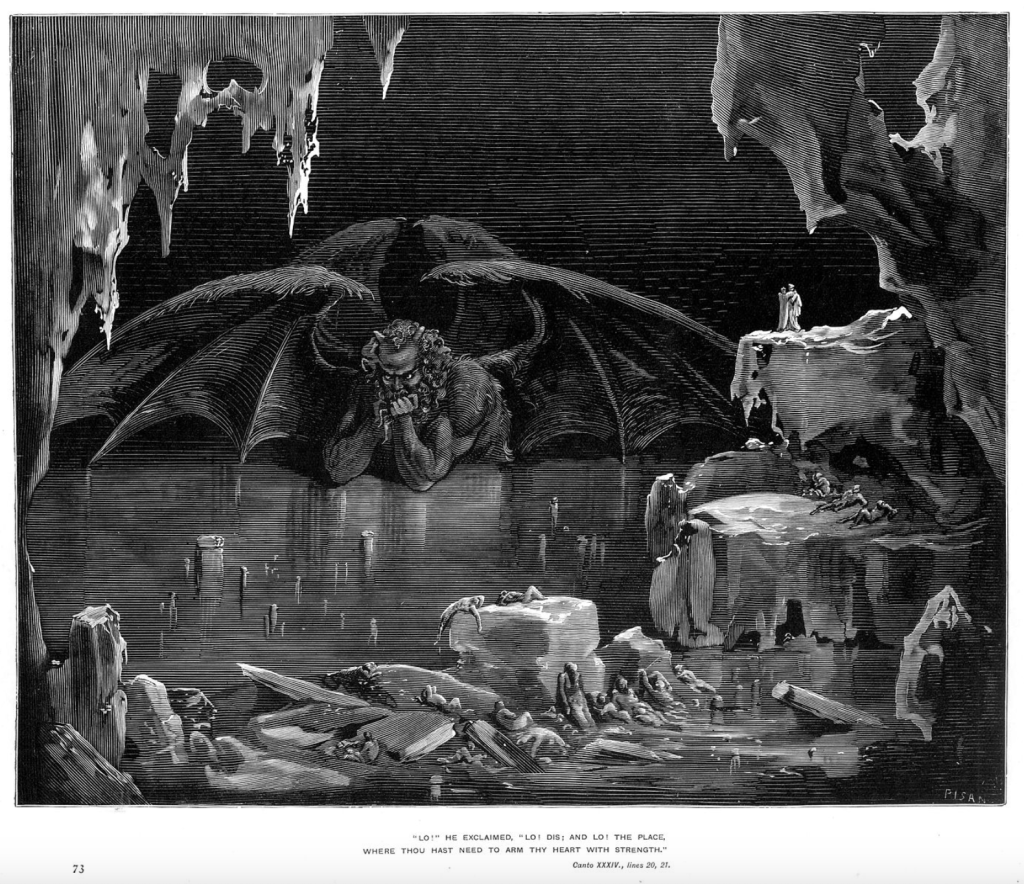
1996 was a pivotal year for the designer and muse. Blow, working diligently inside and outside of the designer’s atelier, is critical to many of McQueen’s numerous accomplishments and success throughout the year. The British Fashion Council awarded McQueen with his first accolade as Designer of the Year, a title he would receive three more times. Blow was influential in securing McQueen’s position at the established French couture house Givenchy. David Bowie commissioned McQueen to design the jacket featured on the artist’s Earthling album. The duo’s pièce de résistance in 1996 was Alexander McQueen’s eighth collection, Dante.
The 1996 collection was hosted at Christ Church in Spitalfields, an East End neighborhood, and inspired by the 14th-century poet and author of the Divine Comedy, Dante Alighieri. Blow was fascinated by Nicholas Hawksmoor, the Baroque architect of Christ Church, who was portrayed as an occultist in Peter Ackroyd’s Hawksmoor. McQueen also leaned on Blow’s in-depth knowledge of Victorian aesthetics to support the ideas of terror and magnificence. When McQueen’s desire to synthesize myriad ideas into artful storytelling combined with Blow’s acute historical knowledge and ability to promote an event, a production that was part art and part fashion show emerged, synthesizing sculptural shapes, luxurious and heavily treated fabrics, immaculate monochromatic prints based on floral patterns and Don McCullin’s wartime photography, and aggressive tailoring into a single narrative. This form of storytelling would go on to be a hallmark of McQueen’s design milieu. Dante also elevated the innovation and audacity of McQueen to an international audience. Judith Watt, noted McQueen biographer, stated:
The links between Dante Alighieri, the Florentine fourteenth-century poet and author of The Divine Comedy, were implicit at first, but the strange fusion of the inferno of life with the inevitability of death gradually became obvious.
Religious themes were always present in McQueen’s work. Dante amplified his views and created strong parallels between religion and war, noting its propensity to make all life hell. McQueen dedicated Dante to his muse, Isabella Blow.
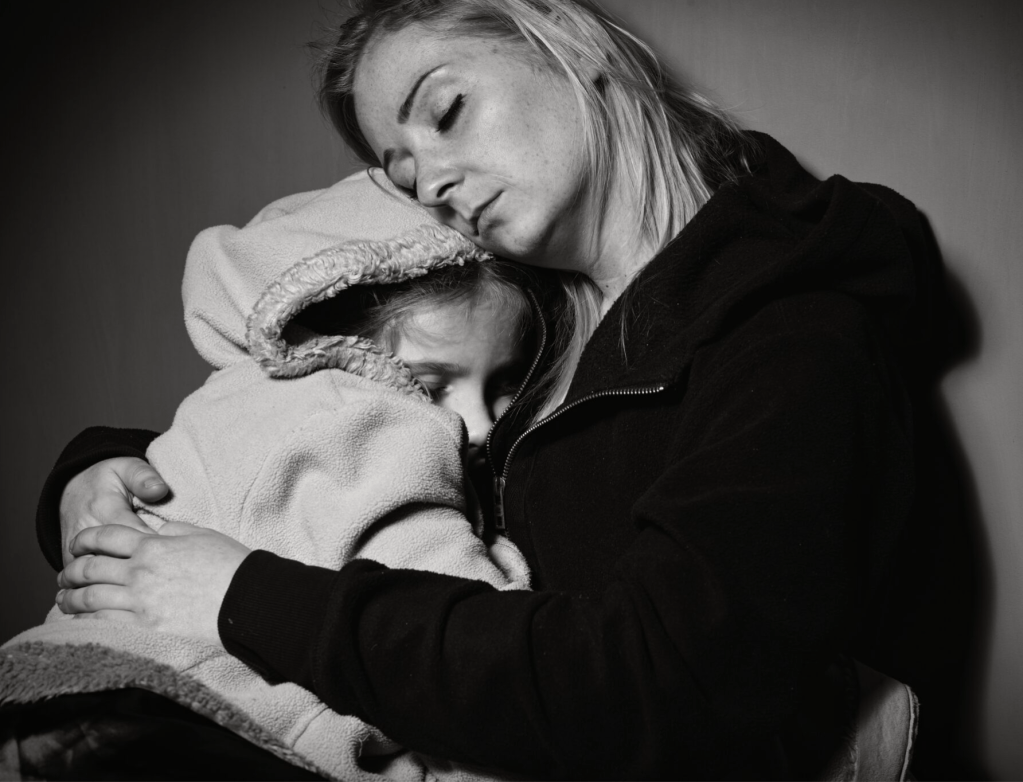
While Blow and McQueen were making art out of conceptualized notions of a modern hell on the catwalk in 1996, the United States Federal Government was making hell a reality for many of its citizens, the majority of them single poor women. The Personal Responsibility and Work Opportunity Reconciliation Act was passed by a Republican-controlled Congress and signed into law by Democratic President Bill Clinton. The law underscored Clinton’s campaign promise to end the current welfare system and was the foundation of the Republican Contract with America, a legislative agenda that featured significant welfare reform. Abolishing and amending many of the social safety net programs created to assist people living in poverty, the PRWORA reduced the responsibility of the federal government and provided individual states with a broad autonomy to deliver programs meant to address poverty. The Aid to Families With Dependent Children program was ended and replaced with Temporary Aid for Needy Families. Time limits and work requirements were mandated while eligibility for food assistance was restricted, and assistance to immigrants was all but eliminated. In a fell swoop, Democrats and Republicans dismantled many programs created under FDR’s New Deal and erased the legacy of Lyndon B. Johnson’s War on Poverty. The U.S. Chamber of Commerce, a politically conservative organization, praised the passing of the PRWORA as a “reassertion of America’s work ethic.”
As the 104th Congress praised their own efforts with the bill, reality quickly shifted for single women living in poverty in the United States. Heather Boushey, an economist with The Economic Policy Institute, testified before Congress detailing the effects of the PRWORA. The work requirements of the law never accounted for the gender pay gap, a stagnated minimum wage, or the decreased availability of full-time jobs with benefits. All of these factors highly affected single mothers who saw their poverty rates increase after the law’s passing. A goal of the PRWORA was to decrease the caseload of people needing the social safety net. Boushey and others pointed out that this indicator as a measurement of success was flawed because it was dependent on economic prosperity. During economic recession and the loss of jobs, the indicator would not accurately account for the gender differences inherent in the labor sectors. The work requirements did see many people working, but jobs often paid below the salary needed to ensure childcare, healthcare, food, and basic necessities. Again, Boushey pointed out that all of these factors adversely and disproportionately affected single women with children in poverty. Single women who were suffering before the passing of the PRWORA continued to suffer after its passing. Jason DeParle, in a New York Times article, reported that single mothers in poverty had been left without means to survive, turning to desperate and sometimes illegal ways to survive that included shoplifting, selling blood, scavenging trash bins, moving in with friends, and returning to violent partners. The 104th Congress, a body that was 89.4% men, had decimated the lives of poor women with children.

Unlike the way women have historically supported and taken care of men, men have been negligent in their support of women. Isabella Blow was relentless in her support of talent, including McQueen, and that support was seldom reciprocated. When McQueen went to Givenchy, he took a cadre of talent to the French haute couture house; Blow was not amongst them. Blow was critical in securing a lucrative partnership with the Gucci Group that gave McQueen considerable financial resources and complete artistic control of the Alexander McQueen labels. Blow received nothing. McQueen distanced himself from Blow with each new accomplishment. David LaChapelle photographed the designer and his muse for a March 1997 Vanity Fair article. The portrait, which prominently features McQueen in the foreground holding a torch and wearing a bold gown, has a more subdued and covered Blow attending to the train of his dress. The portrait now hangs in London’s National Portrait Gallery with a descriptor that brags of subverted gender roles in the portrait. An accurate examination would refute this claim. McQueen may be wearing a dress, but he is still the male protagonist, who is being attended by a subservient female.
Blow’s relationship with McQueen was made more complicated by mental illness. McQueen had struggles with drug abuse, anxiety, insomnia, and depression. After being diagnosed with HIV and the death of his mother, McQueen committed suicide in 2010. Isabella Blow suffered from depression and bipolar disorder and was diagnosed with ovarian cancer. In 2007, she committed suicide. These two artists lived in a continual orbit of attraction and neglect, creating the hell on earth they both foreshadowed in the infamous 1996 Dante show.

Isabella Blow’s funeral was on May 15, 2007, at Gloucester Cathedral, the same church where she married Detmar Blow in 1989. Her coffin was draped in a blanket of white roses and centered on Philipp Treacy’s black ship hat rising in the middle. Anna Wintour and Michael Roberts eulogized her. White horses dressed in black plumes styled by Treacy pulled her coffin to its final resting place, dancing down the street and giving Isabella Blow the grand and gothic send-off she well deserved.
In 2010, Lauren Goldstein Crowe wrote a compelling biography of Isabella Blow titled Isabella Blow: A Life in Fashion. Many people, including Detmar Blow, criticized Crowe because she never knew Blow. In defense, Crowe published a response, noting:
It may seem strange, but when I think of Isabella now — which of course I do often — I think of her not as a friend, not as a partner, not even as a spirit like many of her friends do, but as a lost little girl. A wickedly funny, tragically insecure, very vulnerable little girl hiding beneath a painstakingly created fantastic facade that attracted the attention of the world. She deserved an independent biography, and I’m proud to be the one who gave it to her.
Sadly, I never knew Isabella Blow. However, like Crowe, I often think of her as a true champion, one who advocates, supports, and protects. Isabella Blow advocated for talents that could reshape a world never genuinely designed for her or other women. She supported so many young artists as they navigated unknown and uncharted territories. And she protected those who so desperately needed sheltering from a harsh world. She did this all while stylishly wearing shapes, patterns, and textiles that were both eccentric and sublime. Isabella Blow remains a muse to many, and I hope to be as supportive of her as she has been inspirational to so many. I do have one thing to offer, Mrs. Isabella Blow: You are simply Boffo Socko!
SOUND + VISION: Champion (The Timeless 1996 Isabella Blow Edition)
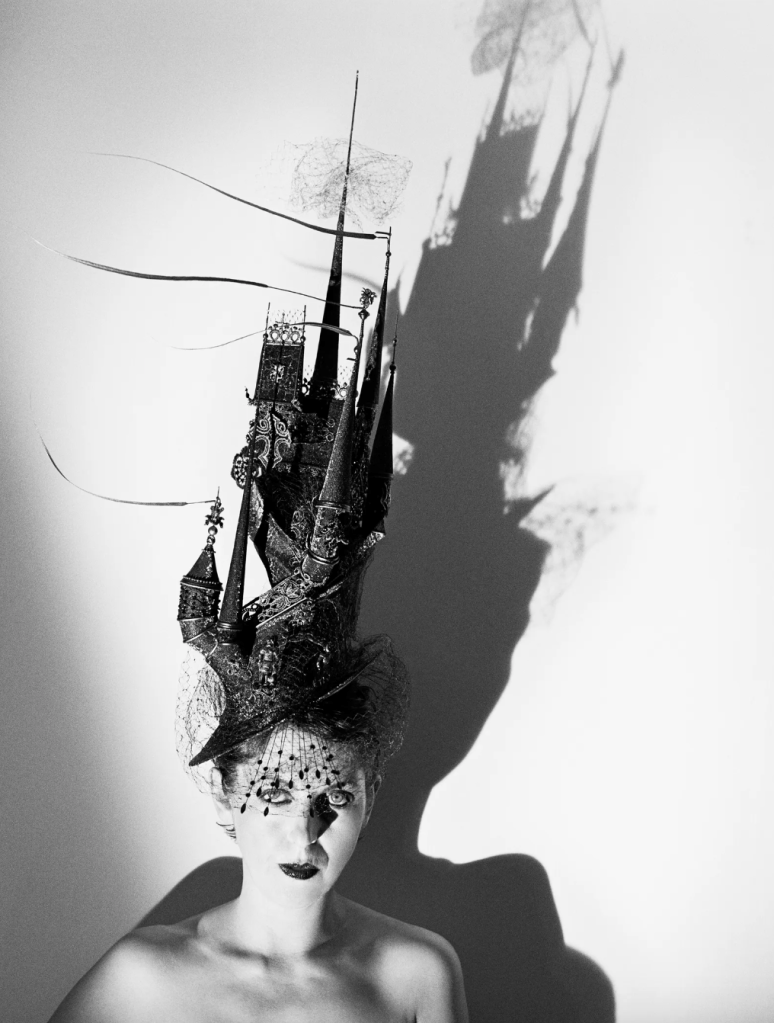
This week’s playlist celebrates the brilliance of Isabella Blow with a playlist imagined to capture the afterparty of the 1996 Alexander McQueen’s Dante, capturing the height of heavens and the harrowing of hells.
- LL Cool J, Doin’ It
- Horace Brown, One For The Money
- Corrina Joseph, Wanna Get Down (Summer Mix)
- 2Pac, Picture Me Rollin’ (Feat. Big Skye, CPO & Danny Boy)
- Shazz, Back In Manhattan ( 12-inch Old School Mix)
- Moné, Movin’ (Roach Motel Style)
- Mood II Swing,Do It Your Way (Feat. John Ciafone)
- House Of Glass, Take Me Over (Unreleased Vocal)
- Presence, Feelin’ Lifted
- Model 500, Starlight
- Mighty Dub Katz, Just Another Groove (2008 Remaster)
- Whiplash & New York Slick, Over Me (Whiplash Presents New York Slick)
- Toronto Track Symphony, Livin’ In Da Projects
- Todd Terry, Martha Walsh & Jocelyn Brown, Keep On Jumpin’
- Mariah Carey, Always Be My Baby (Groove A Pella)
- Reel 2 Real, Jazz It Up (Sneak’s Jazz Dub Mental Mix)
- Everything But The Girl, Corcovado (Knee Deep Remix)
- Mae-L, Sweet Melody (Feat. Selina King Murrel) (Ratcliffe Mix)
- Ratcliffe, Back To The City
- UK, Small Town Boy (R.A.F. Zone Mix)
- Frankie Knuckles & Adeva, Love Can Change It
- Norma Jean Bell, I’m Baddest Bitch (Moody Man Mix)
- Down To The Bone, Brooklyn Heights
- Björk, Hyperballad (Robin Hood Riding Through The Glen Mix)
- Ferry Ultra & Roy Ayers, Dangerous Vibes (Mousse T. R&B Mix Vibestrumental)
- Two Lone Swordsmen, Jakey In The Subway (Two Lone Swordsmen Vs. One True Pod)
- Nightmares On Wax, Dreddoverboard
- Michael Jackson, They Don’t Care About Us
- Aaliyah, Got To Give It Up (Feat. Slick Rick)
- George Michael, Fast Love Part 1
- Mark Morrison, Return Of The Mack (C&J Extended Mix)
- Babyface, This Is For The Lover In You (Honey Lookin’ Laced Extended Mix)
- Maxwell, Ascension (Don’t You Ever Wonder)
- Jamiroquai, Virtual Insanity (Salaam Remi Remix)
- Ghost Town DJs, My Boo (Hitman’s Club Mix)
- The Roots, One Shine
- Lil’ Kim, Crush On You (Feat Lil’ Cease)
- Foxy Brown, Get Me Home Tonight (Feat. Blackstreet)
- DJ Q, Going Forward In Reverse
- A Tribe Called Quest, Get A Hold
- MC Lyte, Cold Rock A Party
- Outkast, Elevators (ONP 86 Mix)
- Bone Thugs-N-Harmony, Tha Crossroads
- Ginuwine, Pony
- Sneaker Pimps, 6 underground
- Spice Girls, 2 Become 1 (Dave Way Remix)
- Olive, Miracle
- Craig Armstrong, Kissing You (Love Theme From Romeo + Juliet)
- Des’ree, I’m Kissing You (Full Length Version)
- Bjork, Hyperballad (LFO’s 3am Mix)
- Nearly God, Poems
Listen on Spotify, YouTube, or Apple Music
 The Last Boudoir in Angier
Leave a comment