When she swooped into the house, you could hardly see her face because it was hidden by meticulously wrapped packages, enveloped in large floral prints, tied with satin ribbons, and note cards from Montaldo’s. She was a petite woman, but her entrance was always grand, accompanied by a laugh too large for her small bones and eyes wide enough to take in the whole world. Her Charlestonian accent emphasized vowels, drawing out sounds both subtle and primal while neglecting the placement of necessary consonants. She would retrieve a square silver box with an engraved print swirling on its cover, sliding it open to reveal a row of cigarettes. She smoked king-sized Chesterfields. Her feet were crossed at the ankles, and her tweed suits refused to wrinkle. The fresh flower on her lapel delicately provided an intoxicating fragrance that mixed with perfume, obviously foreign and exotic. Her hair was wrapped in a simple chignon, knotted in the same manner as the silk scarf around her neck, each somehow loose while remaining perfectly in place.
My godmother was an infamous woman who made appearances at Christmas, Easter, and my birthday. Her presence was never amongst other guests. Her presence occurred a few days before or after the gathering when she could be the only visitant. Seated in a wingback chair, she would take off her gloves, folding them in a ritual as easy and unrushed as her voice. In the folding, the transformation occurred, and she became neither stranger nor guest but officiant administering words and ideas as our communion. The liturgy of her visit was always familiar while being charged with an anticipation that writhed through my body, craving everything she was offering. Her litany was uniformly initiated with a simple confession. “Your mother has always been my favorite.”

By proximity, I also became a favorite and communicant, sitting at her feet, eager for her words. My godmother, like so many people in my family, was a storyteller, unraveling ancient and heroic mythologies. Her hands would dance in waves and fall, enhancing every syllable recited. Each word was measured and precisely placed with the sole purpose of enrapturing the listener. From her tiny frame in an oversized chair, she painted the lives of Hera, Penelope, and Demeter, detailing their courage, cleverness, and agony. These homilies, a powerful union of hands and voice, quickly drew quivers to the bow, mounted treacherous peaks, and mourned the fallen. The mastery of her abilities lay not only in what she told but also in what she held in reserve. Her focus on narrative was never personal, leaving her congregant with great questions. How does she know these stories? Where had she been? Who told her these stories? With extraordinary omniscience, she knew these questions lingered but never found the need to supply their answers. The empty space would provoke a mind’s imagination. She keenly understood her role as celebrant was to inspire creativity, provide solace, and promote mystery.
Not all of life’s phenomena are meant to be easily understood. Our brains function to synthesize and construct ideas from physical, visual, and auditory messages, providing reasoning and meaning about the world and its inhabitants. Known as perceptual completion, these stimuli couple with past experiences, contexts, and surrounding information to fill in any ambiguity, a state that could render potential harm. When this type of logic fails, we begin to explore these sensations with more imaginative approaches. Albert Einstein noted in a 1929 interview that imagination was more important than knowledge. The quickly unsolvable allows the imagination to construct critical insights and fashion new ideas that before were unobtainable or unfathomable.
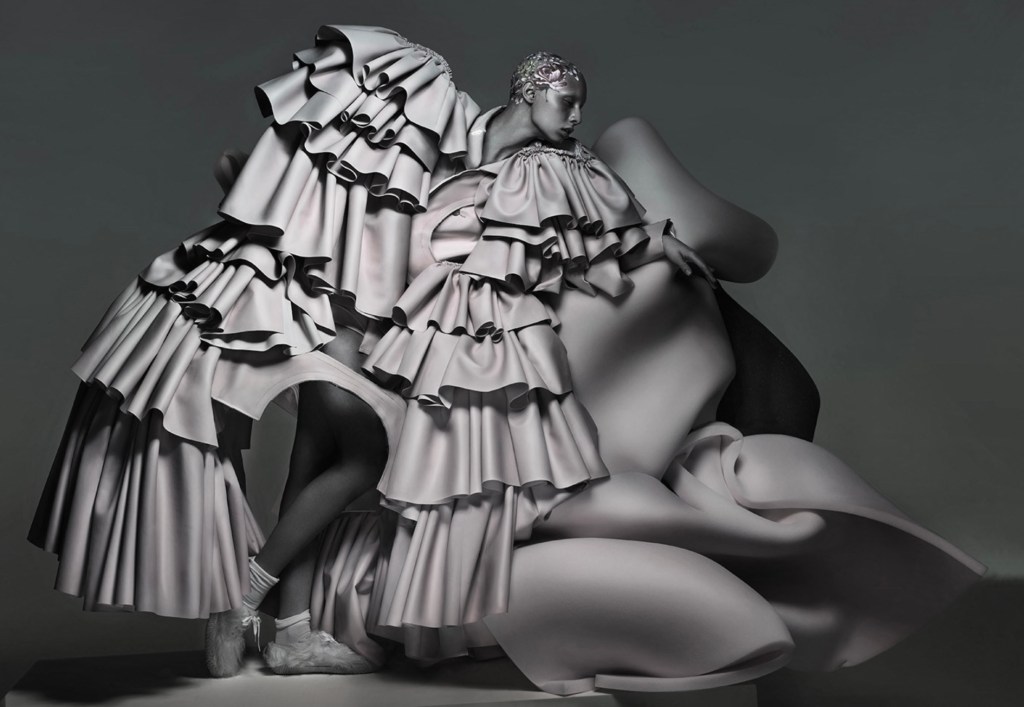
The small pastel floral cap mimics the folds of the scarf at the shoulders before melting and reforming a warrior-esque uniform clad in deep reds and black, the fold now like giant waves cascading down the body. Within a moment, the soldier has faded, transforming into the petal and pistil of a subtle flower before transforming into a flowing pink kimono. Each conversion highlights a model uncertain of human or mechanoid origin. The final transfiguration blends everything witnessed over the past 45 seconds, skillfully marrying folds, cascades, flowers, and soldiers into an inexplicable figure the eye can only see as beautiful. Watching Rei Kawakubo’s video is simultaneously confusing and inspiring, enticing and incomprehensible, intriguing and bewildering. Her work is a mystery.
Much of Kawakubo’s life and work consists of dichotomous ideas and events that generally do not co-exist in our day-to-day lives. She was born and raised in post-World War II Tokyo, a city ravaged by the war. The nation’s industry was inoperable due to bombings, economic hardships abounded, food shortages required rations, and Japan was still trying to comprehend the aftermath of the Hiroshima and Nagasaki bombings. Rei Kawakubo insists her childhood was normal and traditional. The family was academic in nature, with Kawakubo’s father holding an administrative position at Keio University. Japanese society was highly patriarchal, and Kawakubo’s mother was expected to stay in the domestic realm. However, she had her own intellectual pursuits and divorced her husband to fulfill her dreams of becoming a high school teacher. Divorce was taboo and would remain so until the industrial boom in 1960s Japan. In a society where women were to be subservient, Kawakubo’s mother was defiant and independent.
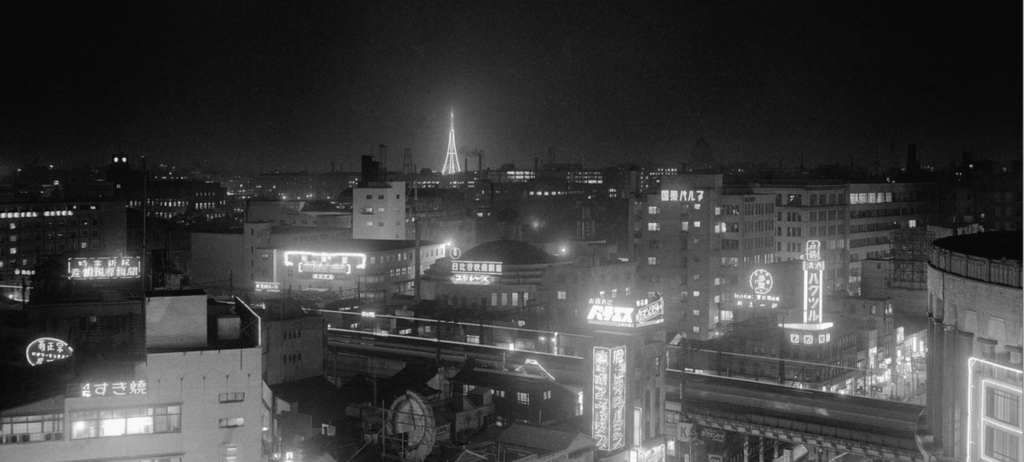
Rei Kawakubo continued to marry these contradictions when she entered Keio University in 1960. Although post-war reforms had granted women legal access to higher education in Japan, women constituted less than 13% of college students. The rate rose marginally by the 1980s when approximately 25% of students were women. Most women were ushered to junior colleges, and if they did enroll in four-year institutions, they were relegated to the departments of home economics or education. Kawakubo defied this trend by enrolling in an elite university and studying aesthetics. She utilized art and literature from the East and West to form her ideas and research, graduating by 1964. Upon graduation, without family discussion, Kawakubo moved to Tokyo’s Harajuku neighborhood, the center of Japan’s youth movement.
Duality comprises Kawakubo’s view of the world. By early adulthood in the 1960s, she equally embraced the rebellious nature of the bohemian Harajuku district and the socially elite education that revered Japanese culture and tradition. While a degree in aesthetics is preparation for cerebral pursuits, Kawakubo took a job in advertising with textile manufacturer Asahi Kasei. Quickly, within the organization, Kawakubo became known for her unwillingness to dress in the uniform expected of women entering the workforce and her keen ability to source costumes for print advertisements. When off-the-rack garments did not match her ideas, Kawakubo began designing and making clothes to materialize her vision. Two years after joining the textile conglomerate, she began designing and selling her own clothing line in local boutiques.

By 1973, Kawakubo incorporated her business as Comme des Garçons. The name borrows from Françoise Hardy’s song on her 1962 untitled debut album. “Tous les garçons et les filles,” the first track, recites the story of a woman unable to find love amidst amorous couples. The single was a success, selling more than 500,000 copies in France before being re-recorded for international audiences in 1962. Hardy sings “Comme des garçons et les filles de mon âge” (like some boys and girls my age). Kawakubo utilized Comme des Garçons (like some boys), referencing the ease and unrestrained nature with which boys can walk in the world. The designer emulated the freedom found in such a stance, embracing her career and her independence. By 1975, Kawakubo opened her first boutique in Tokyo. By 1978, Comme des Garçons had expanded to include a line for men.
From this point, the designer’s timeline explodes with innovation and accomplishments. When the 1980s initiated broad shoulders, bold colors, and outrageous excess, Kawakubo stepped into Parisian fashion with deconstructed minimalist designs in black, gray, and white. Comme des Garçons captured defiance in the workforce, assisting people who wanted to be different than their yuppie counterparts. Iconoclasts walked her runways. Basquiat, Björk, and Hopper signaled that genre-defying fashion embraced and coupled with genre-defying art. Print ads inverted the glamour heralded by the supermodels, featured pop lyrics imprinted on the artwork, centered marching elephants in an urban landscape, and alluded to the nickname of Comme des Garçons fans, crows. Moving the clothing to a secondary position emphasized Kawakubo’s vision of the brand as an ever-changing and ever-evolving idea that was not beholden to any constraint.

Critics, journalists, and fans of Comme des Garçons have longed to construct meaning and understand the vision of Rei Kawakubo. The designer’s output inspires the observer to make connections between her past in post-war Japan and her current role as an innovator and provocateur. They ask questions. How did your mother’s journey to independence influence you? What is the role of Japanese culture and tradition in your design? How has your understanding of womanhood impacted your career as a fashion designer? Their minds are doing what they are designed to do: engage in perceptual completion using signals, experience, and contexts to construct meaning. With Kawakubo, this is a futile exercise.
Notoriously enigmatic, Kawakubo rarely grants interviews to the media, and when she does sit down with a journalist, her answers are often short and cryptic. In many interviews, she is comfortable giving a single, one-word answer: No. Susannah Frankel, the editor of AnOther, once asked Kawakubo about the foundational thoughts of her 2015 collection. In response, Kawakubo drew a circle on a blank piece of paper and left the room. Piecing together aspects of Kawakubo’s life and ethos requires a scholarly rigor for research, a deep admiration for puzzles, and a contentment with never finding the answers. The complexities are too ambiguous for most reporters who will portray Kawakubo in fantastical terms that are, at best, subjective.

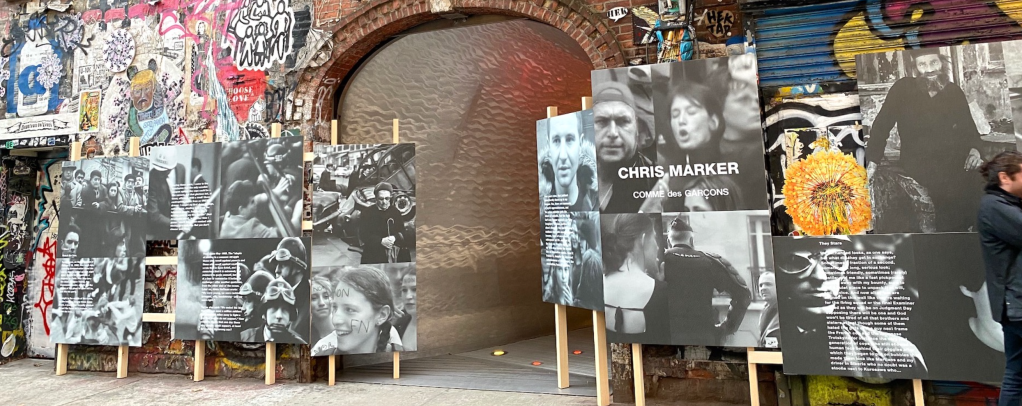
With so much uncertainty, we must examine the known facts of Kawakubo and her artistic output. She is the sole owner of Comme des Garçons, a veritable accomplishment in the world of fashion conglomerates. Within the Comme des Garçons company, she operates boutiques throughout the world and produces a number of lines, including Comme des Garçons Homme, Homme Deux, Homme Plus, Shirt, Black, Play, CDG, Junya Watanabe, and Noir by Kei Ninomiya. She lives in a Tokyo apartment, and her only revelation about any indulgence is her 1970s vintage Mitsubishi. She invented the pop-up shop retail experience. Now, she has evolved, offering Dover Street Market, a boutique featuring the elements of an old-school department store offering myriad luxuries, a futuristic retail experience with ever-changing interiors, and an exhibition space devoted to priceless finds. Kawakubo’s newest venture is The Trading Museum. The once-again reinvented retail space heavily focuses on the elements of a museum, offering the most unique and coveted fashion pieces in cases borrowed from London’s Victoria & Albert Museum.
Reading Kawakubo’s litany of creations makes it almost impossible not to editorialize. Resisting this urge, an examination must be of the elements only apparent to the physical and tangible world: her designs. Kawakubo has repeatedly demanded that her work should be examined solely on its appearance, not the context of her life. Her designs indeed tell a story, and her work provides insight into living that is entirely countercultural to everything we have been taught.
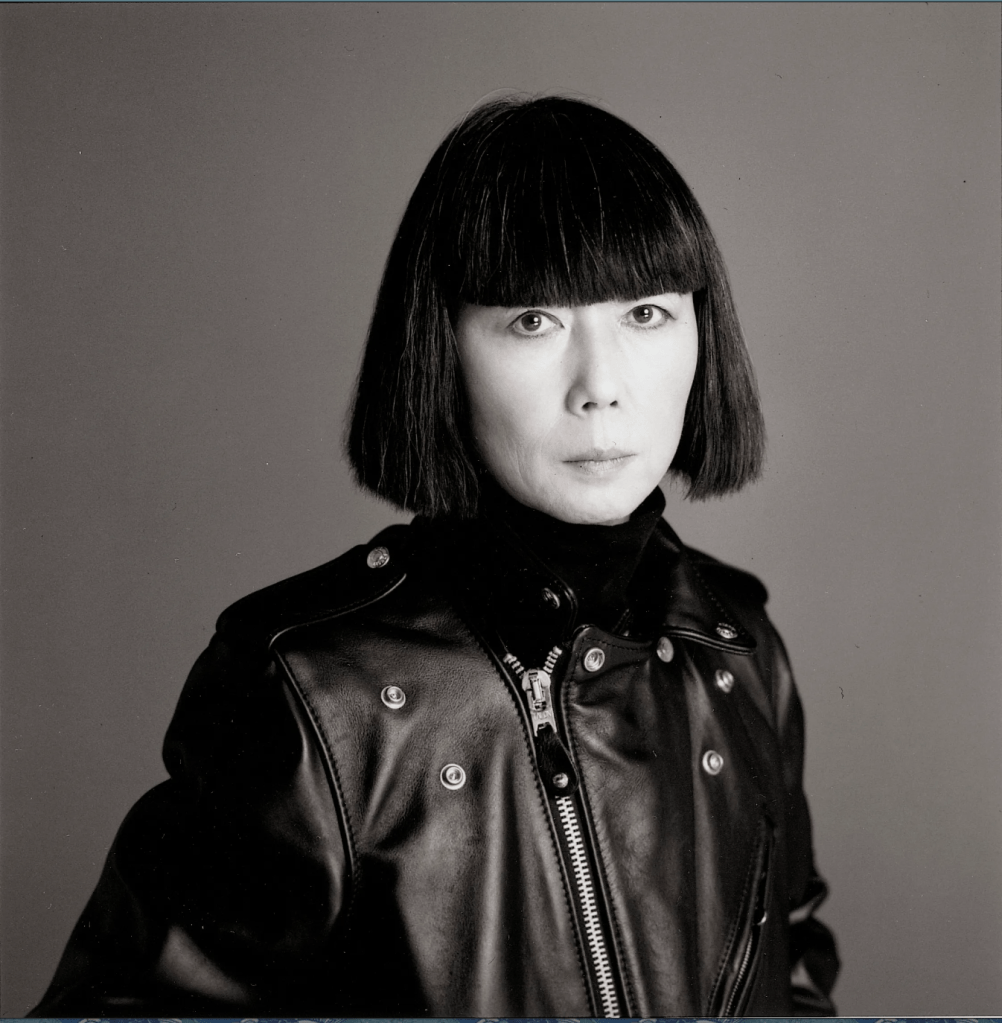
While the brain’s function for perceptual completion draws on past experiences to create meaning, Kawakubo’s creation negotiates a newness that can never be dependent on the past because she understands that our history and experiences have created the problems. Solutions will not be rooted in the same foundation that originated the troublesome predicaments. Kawakubo has supported this hypothesis by continually talking about her search for the new. In a 2019 interview with Björk, one of her most playful and revealing, she emphasizes:
I try to make strong clothes. But this is an extremely difficult thing to do. I have never made anything consciously thinking about Japan, either. I just spend every day looking for something new, something that goes beyond any cultural references and which has nothing to do with where I am from.
Kawakubo’s search for the new is not a mysterious creation ex nihilo but rooted in her ability to understand that life is not easily separated into the socially acceptable binaries of society. The Metropolitan Museum of Art mounted a retrospective of the living artist’s work in 2017 titled Rei Kawakubo/Comme des Garçons: Art of the In-Between. For the exhibit, the curator, Andrew Barton, worked with Kawakubo to focus on nine expressions: Absence/Presence; Design/Not Design; Fashion/Antifashion; Model/Multiple; High/Low; Then/Now; Self/Other; Object/Subject; and Clothes/Not Clothes. These identities were not meant to define objects but to demonstrate how dichotomous ideas can simultaneously exist while not existing at all. The space in between creates uncertainty that does not need an immediate resolution but a landing spot to build the new. Known as interstitial, the liminal areas between ideas, images, and mechanics are critical to the designer. Kawakubo has sojourned to this go-between throughout her career, creating designs that are very much of the time while also being timeless.

My closet contains several pieces designed by Rei Kawakubo and her colleagues at Comme des Garçons. Rei Kawakubo has adoring fans that include Pharrell Williams, John Waters, and Michelle Elie. Like many of her acolytes, I hold both reverence and admiration for Kawakubo and Comme, as it is called by so many. The shirts, sweaters, and jackets resist easy definitions. Is this a sweater? What do the holes represent? Should a button be here? Why is there a button here? The articles of clothing also encourage me to pause before too quickly answering the questions, realizing finding a new solution will take time, effort, and a different understanding. Our brains want to construct facts, and although facts are critical, they are not the only way to construct knowledge. Rei Kawakubo understands this oxymoron, as did my godmother. At their core, they are storytellers, weaving intricacies and complexities with their hands. And, while their stories may never be straightforward, easy, or factual, they are always true.
SOUND + VISION: Interstitial (The Timeless Rei Kawakubo/Comme des Garçons edition)

This week’s playlist celebrates the genius of Rei Kawakubo with a group of artists and music that defies genre, classification, and easy listening while remaining sublime.
- Erice Satie: Trois Gymnopédies, No.1, Yuki Takashi & Mutsumi Hatano
- Alone In Kyoto, Air
- Definition, Kruder & Dorfmeister
- Chanel Pit, Tierra Whack
- Baby Luv (ALASKALASKA Remix), Nilüfer Yanya
- Comme Des Garçons, Lil Tracy & Pi’erre Bourne
- Drone Bomb Me, ANOHNI
- Williams Dub, Grace Jones
- Tom’s Diner (Featuring Mizuki Kamata), Nautilus
- Truth, Kamasi Washington
- The Spoken Word, Vibes Alive (Sadly, Not On Spotify)
- St. Thomas, Sonny Rollins
- Sound Vibrations, Dorothy Ashby
- Madame Zzaj, Brooklyn Funk Essentials
- 69 année érotique, Serge Gainsbourg
- Change, Incognito
- When Midnight Sighs, P.M. Dawn
- 4, Aphex Twin
- Pray For A Star, Felix Da Housecat
- Bedtime Story, Madonna
- Commes Des Garçons, Kamaiyah
- Time (With Ursula Rucker), 4Hero
- Private Space, Durand Jones & The Indications & Aaron Frazer
- Concerto Of The Desperado, The Roots
- A Strange Light In Your Eyes, Romauld
- Mysterons, Portishead
- The Love Sermon, Al Green
- Everybody Is A Star, Sly & The Family Stone
- Tous les garçons et les filles, Françoise Hardy
- If It’s Magic, Stevie Wonder
- It’s In Our Hands, Björk
- Oneness, Supreme Beings Of Leisure
- The Creator Has A Master Plan, Norman Connors
- Eleni Karandrou: Eternity And A Day, No. 15, Trio And Eternity Theme, String Orchestra La Camerata
- Samuel Barber: Adagio For Strings, Leonard Benrstein & New York Philharmonic
- The Space For Love, Julee Cruise
- Henryck Gorecki: No.3, Opus 36, II, Dawn Upshaw & London Sinfonietta
- Full on Night (Recension Mix), Rachel’s & Matmos
- Erice Satie: Trois Gymnopédies, No.1, Reinbert de Leeuw
Listen on Spotify, YouTube, or Apple Music
 The Last Boudoir in Angier
Leave a comment