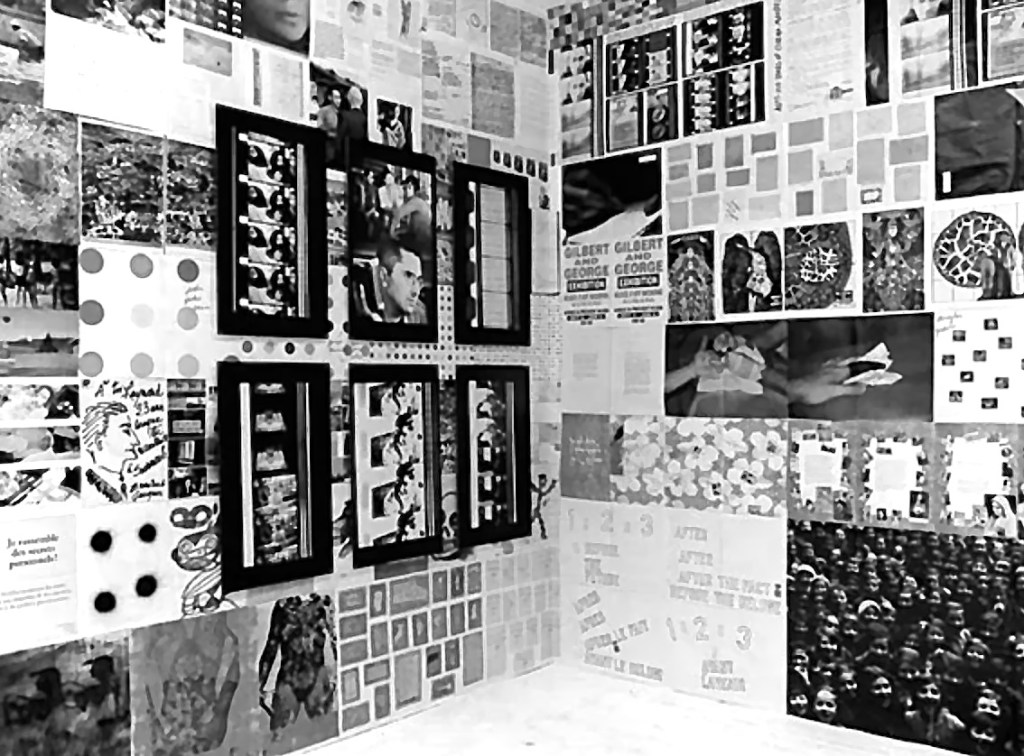
The perfumes on her vanity created a treasury of shape and color, intoxicating to my nine-year-old eyes. There was a bowl shape funneled gracefully to a small neck with a royal blue stopper, a sizable amber block with an affixed gold lid, a rounded obelisk with an atomizer, and a rectangular wedge with beveled glass. Their contents displayed a spectrum of ambers and honey, while their names alluded to exotic locales and lifestyles. My grandmother’s perfumes disclosed who she was, and by 1981, she was gracious, polite, formidable, unique, and fashionable.
Her ritual at the vanity was enchanting, inviting me into a sophisticated adult world glamorized by her magazines and choice of nighttime television. With a small linen handkerchief, she would delicately blot her lips, perfecting the shade of tawny red before examining her appearance in the mirror. Her eyes would systematically move upward, ready to catch any imperfection that needed amending. Next, her hands would meticulously fold a small piece of silk, transforming it from square to rectangular, adjusting the edges into perfect folds that would drape at her neck. The arms and chest of the tweed blazer received a slight tug before she pinned a brooch to the left side. Her hand would purposefully lift one of the perfume bottles, slightly misting the air in front of her as if her very being would draw in the fragrance. Lastly, she would pause, acknowledging the ritual’s final moments silently, maybe wishing the image could be stilled for an eternity. She would slide the oversized black sunglasses on her face and break the communion with herself, recognizing me in the mirror reflection. “I’m ready.”
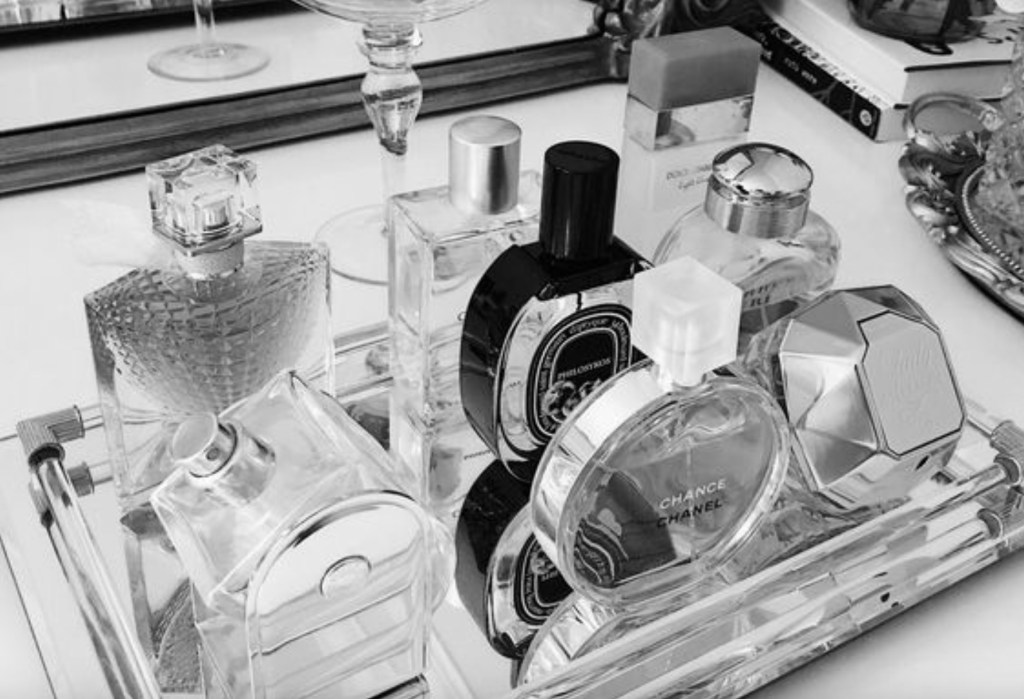
Ceremony was a precise practice in my grandmother’s life. Small acts were arranged dutifully and carefully, building into a performance and presentation where the parts and sum were never truly understood by the viewers. She was a marvelous host, entertaining two or twenty with the same panache. Her wit and intellect went unmatched at her workplace in the long hallway of offices usually reserved only for men. She took leisure seriously, believing the sun, fresh air, and streets of distant lands were medicinal. To the outside world, she seemed to float, offering a smile as the much-needed accessory to any wardrobe. To those of us allowed into her bedroom, we knew ornament and exhibition took hard work.
Women work hard. Globally, the average woman walks 2,000 steps more than a male counterpart, logging an extra mile each day. Women in the workplace also extend great energy to survive in fields dominated for centuries by men. Elizabeth Gorman of the University of Virginia and Julie Kmec of Washington State University conducted a survey of women in the workplace over three decades from 1977 to 2001. Their results were consistent and conclusive: Women say they work harder than their male counterparts. Couple their efforts in the workplace with obligations in the home, and the load increases. In 2023, The Pew Research Center found that in heterosexual couples where salaries were almost equal, women performed two hours per week more of childcare and two and a half more hours per week of domestic chores than their male husbands. Women also did not share in the extra three and a half hours per week of leisure enjoyed by the men. From the boardroom to the P.T.A. to the kitchen to their civic engagements, women work hard.

In 1981, my grandmother was no exception, and her hard work was from sunrise to sunset, bookended by a beauty regimen that was almost Victorian. In the morning, lotions and creams prepared her to face her job at the bank, shuttle children from piano to dance, sing in the church choir, cook dinner for a hungry family, and organize events in her social club. At night, creams and lotions helped her decompress, removing the toil of the previous day. With all the labor in her life, Saturday was not exempt from her scheduled rituals. Her ceremonial routine was executed with strict accuracy on Saturday mornings, blotting the lips, checking the eyes, tying the scarf, brushing the jacket, spritzing the perfume, and adorning the sunglasses. My grandmother completed these tasks quietly by 9:30 a.m. so as not to awaken her sleeping household. By 9:31, her gloves were on, and the keys were in her hand. Her Saturdays were reserved for shopping, and if you asked her why she was going, she would solemnly reply, “I just want a little something new.”
“New” and “fresh” were the words used to describe Agnés Troublé Bourgois when an editor at Elle spotted her at a dinner party wearing a military surplus jacket, a floral jumper, an altered skirt, and cowboy boots. Bourgois was barely twenty years old, the mother of two children, recently divorced, and needing a job. She began working as a stylist and junior editor for the fashion magazine. After performing very well as a stylist, Bourgeois was recruited as a designer by Elie and Jacqueline Jacobson, founders of Dorothee Bís. Her first design job was successful, and within a few years, Bourgeois was freelancing for substantial prêt-á-porter firms Cacharel, Limitex, Pierre d’Alby, and V de V. Bourgois kept up a frantic freelance schedule, traveling and designing, and was gaining notoriety. In 1973, Elle was featuring a piece she designed for Limitex and inquired how she should be credited. Not wanting to use her ex-husband’s surname and knowing all lowercase letters would stand out, she asked to be credited as agnés b.
The signature fully represents the style and politics of Agnés Bourgois, part radical, part revolutionary, part bohemian, and part aesthete. Born to an upper-middle-class family in 1941, Agnés Troublé was one of four children. Her father was head of the Versailles Bar Association, who loved art and music, singing in the chorus of the Paris Opera, and her mother was the daughter of a French officer and privy to an elite education. By her teens, her family described her as a sweet rebel. Coming of age in the 1960s, Bourgois was subject to myriad influences. Undoubtedly, one of the most important was the student and labor revolutions of 1968, known as Mai 68.
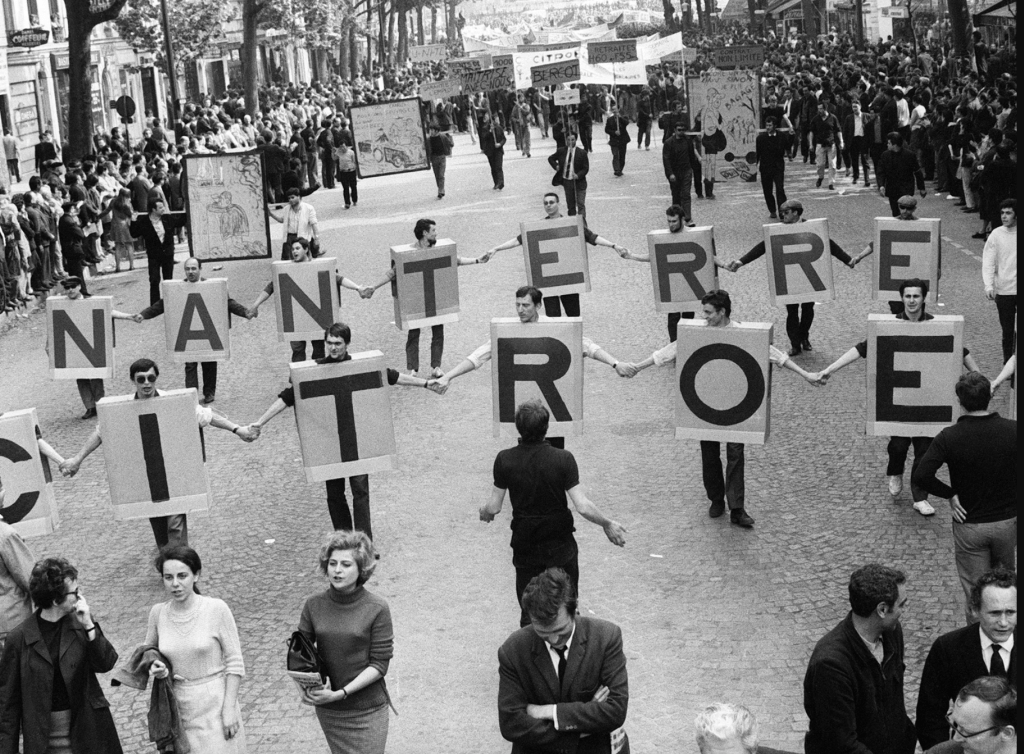
Prior to the revolution in 1968, France was under the ten-year presidency of conservative Charles de Gaulle. French society was highly autocratic and patriarchal, with social rules governing every aspect of public life, affecting the exponentially growing number of university students in post-war Paris. The constraints of society were mirrored in de Gaulle’s government, where extra-constitutional means were used to secure his presidency in 1958. By the late 1960s, French students perceived an outdated world ruled by a pseudo-dictator heralding American Imperialism and the Vietnam War. Students began protesting in March, demanding the end of the war and the ability to visit the opposite sex in the dorms. The movement had spread by May, including more university students and laborers across Paris in seven weeks of protests, demonstrations, general strikes, and the occupation of factories and universities. The actions were met with pronounced police brutality that was broadcast on French media. Agnés Bourgois commented on the 1968 student revolution:
I was with them. We marched. There was the radio, and we always knew where it was happening. I had the use of a car with no doors, a Mini Moke. So I took people who were hurt to the hospital.
The economy came to a halt, the government shut down, and de Gaulle fled to West Germany, fearing civil war. Toward the end of May, the French government met with students and laborers, negotiating for better working conditions and higher wages. President de Gaulle dissolved the political body and called for parliamentary elections in June. Although the political reforms were weak, the social reforms were significant, and Mai 1968 ushered in liberation movements focused on the emancipation of the environment, women, and queer people. In the post-student revolution Paris of the 1970s, social change was centered as a youth movement.

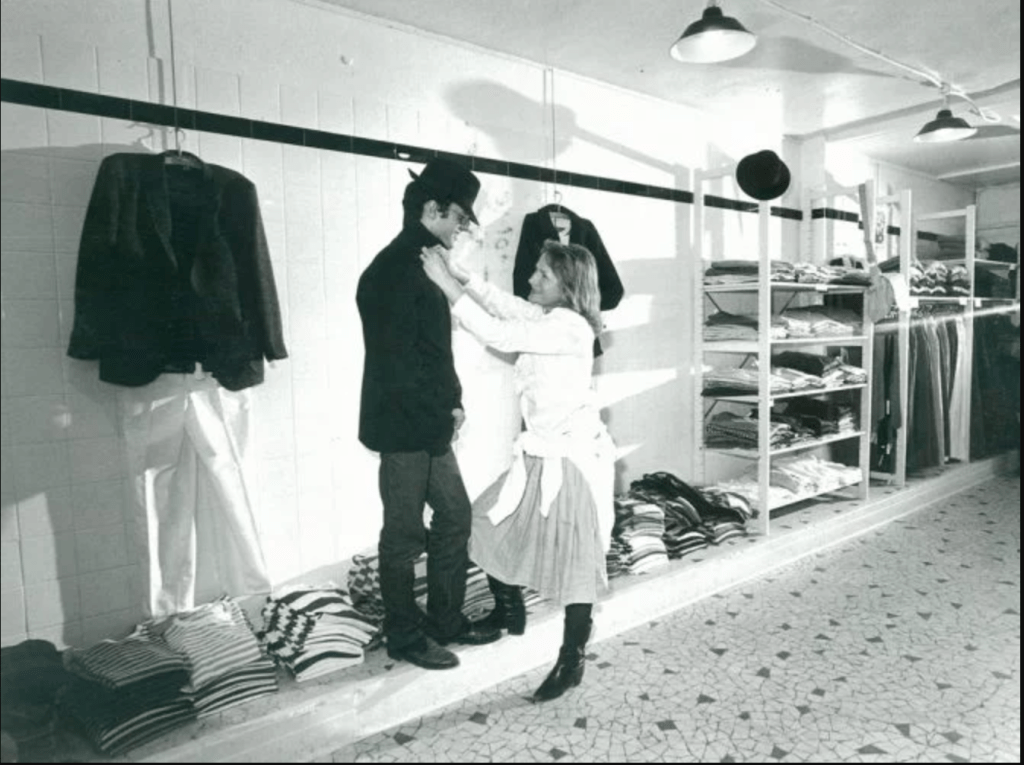
Les Halles, once Paris’s central market, was undergoing radical change, centering on young people and their needs. Bourgois acquired an old butchery and opened the first bricks and mortar agnés b in 1976. Besides being an office and atelier, the shop was a direct expression of the designer’s politics and aesthetics. The interior was minimalist, with birds nesting and flying through the shop. Large black and white posters accented the part egalitarian, part bohemian, part aesthete, part classic style that would become the hallmark of agnés b. Her first collection was inspired by French uniforms and featured loose pants, coveralls, and jackets dyed in unique colors. Soon, the nautical stripe shirt and simple black dress still featured by the designer entered her sartorial vernacular. Approaching the 1980s, agnés b. began to feature its most prominent piece: the snap cardigan.
Bourgeois believed clothes should be practical and chic while being aux current and timeless. Continually incorporating the aesthetics of the French worker, Bourgois would produce the clothes in white and natural cotton and then dye the pieces in subtle colors. Then, she would meticulously amend and alter the pieces, perfecting them for day-to-day life. The advent of prêt-à-porter echoed the sentiments of the student revolutions, and Bourgois captured the feeling by making work clothes for everyone. The Les Halles store quickly became an epicenter for timeless French chic, where soft textures mixed with the radical nature of agnes b. Yet, a phenomenon occurred that was not expected by Bourgois; men began coming to the shop and appropriating her designs into their lives. Understanding the inclusivity of her aesthetics and politics, Bourgeois opened her first men’s store at 3 Rue du Jour in 1981.

While the French were heralding an egalitarian and liberated daily existence, the U.S. was undergoing a different type of revolution. The economic landscape of 1970s America was bleak, with stagnated economic growth, high inflation, high interest rates, and an energy crisis that had many people sitting in long lines for gasoline. Ronald Reagan, a former actor and Governor of California brought a homey optimism to the 1980 presidential campaign, promising change and good times. Jimmy Carter, the sitting President, was honest about the country’s dependency on fossil fuels, asking that the citizens themselves change. Reagan never ceased to remind the American people of their financial hardship and often made Carter the source of their woes. In a Labor Day speech at Liberty Park, the candidate remarked,
A recession is when your neighbor loses his job. A depression is when you lose yours. And recovery is when Jimmy Carter loses his.
Reagan’s offering of a succinct economic plan included a more robust military, deep cuts to government programs, restructured tax codes, a balanced federal budget without a deficit, and a return to supply-side economics. Believing the politicians, Americans overwhelmingly elected Ronald Reagan as the 40th President of the United States.
Reaganomics referred to the President’s economic policies, and like his campaign promises, Reagan instituted widespread tax cuts, de-regulated domestic markets, cut social programs, and eliminated many government jobs. The President believed that if corporations saved money on taxes and materials, their financial profit would increase. The idea is not wrong. Reagan also predicted that if corporations were saving money, the economic stimulus would trickle down to the average American. He was very wrong. The trickle-down effect occurred, but what was passed along to the middle and lower classes was not economic growth but financial stress and burden.
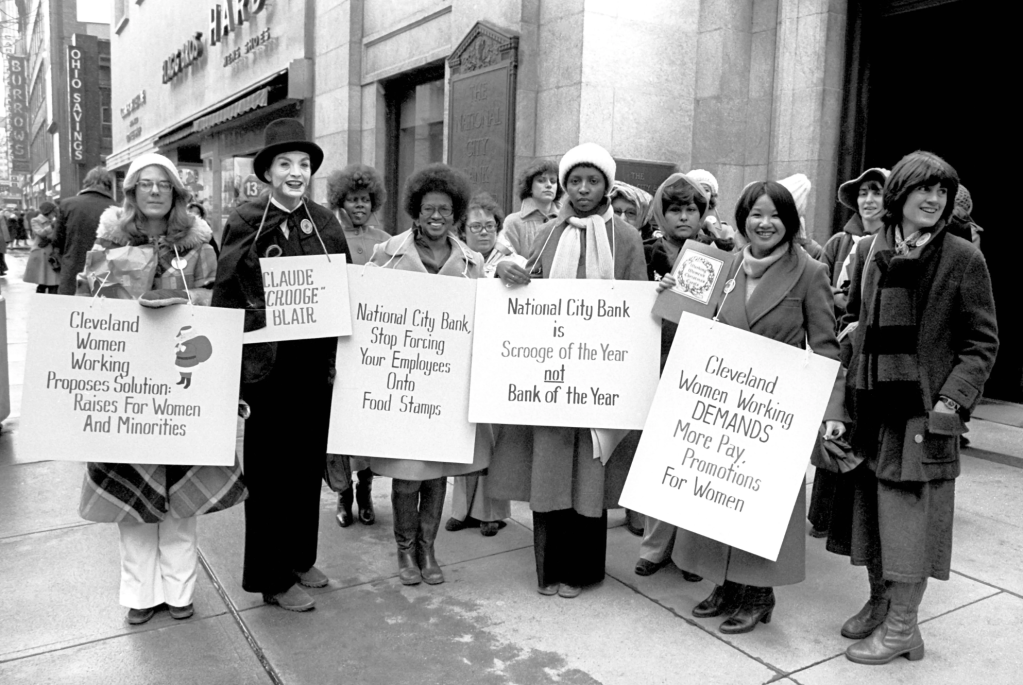
The blunt force of this burden was felt by the women in American society, and the severity of the distress affected women differently depending on their race and class. By 1981, women were in the workforce, and the racial gap seemed to be close, with many women in clerical positions. Yet, when a racial lens is applied, there is a prominent difference between Black women occupying mainly the public sector and white women working in private industry. Advancement within the labor force also overwhelmingly favors white women, with Black women working in more entry-level positions with little chance for advancement. Few women of any race were top executives. By the mid-1980s, only three white women were C.E.O.s of a Fortune 500 Company; one of these shared the position with her husband. Family dynamics in 1981 were also different for Black and white women. 47.1 percent of Black women were single mothers, with 13.9 percent of white women raising children alone. White women were more likely to remarry, and if Black women did remarry, they mainly married Black men who were earning less money than their white counterparts.
When we overlay Reaganomics on the experience of women, the stress becomes evident. Cuts in social services and government employment affected women in the public sector, a place with a high percentage of employees who were Black women. The administration’s policies continually undermined Affirmative Action and under-supported women trying to gain entry into vocations historically dominated by men. The few women who had entered into top management positions most likely benefited from tax cuts, and married women could rely on their husbands’ salaries. Single mothers suffered greatly from cuts in social services. Aid to Families with Dependent Children (AFDC), food stamps, Medicaid, and childcare programs were dramatically slashed, knocking off over a half-million families from AFDC and another 250,000 families from food stamps. These cuts affected low-wage earning women whose lives were supplemented with government programs, and it universally caused hardship for women of all races experiencing poverty. Reagan had promised economic prosperity and used a staggering economy as an excuse to cut aid to citizens.

Agnes Bourgois was doing her own cutting. The mythology around the agnés b. snap cardigan is legendary, and many journalists have proclaimed that the designer was so frustrated with pulling her favorite sweatshirt on and off that she took scissors and dissected the garment. Reality is usually not as dramatic but equally poignant. Bourgeois was frustrated with her long hair getting caught in the sweatshirt. She was also enamored with the feel and look of the jersey. She designed and made the snap garment, tightly aligning the snaps to resemble the uniform of the royal officers at the Château de Versailles. Staying true to her ideals and sense of style, she created something new for everyone.
I can understand my grandmother’s need for something new in 1981. Most of her life, and the lives of women around her, had been the same-old, same-old. They had the same barriers for women entering managerial positions in the workforce, the same domestic and child-raising duties, the same expectations for beauty and perfection, and the same responsibilities in their churches and social clubs. They had to be exhausted. By the time Saturday appeared at the week’s end, she wanted an escape, and her form of escape was an upscale department store.

When accompanying my grandmother shopping, I was subject to her skills of astute negotiation. She proffered a deal advantageous to us both. If I behaved well while she tried on garments, stood for alterations, and coordinated matching accessories, I could visit the store’s record department. Being well-behaved required me to sit in a chair and read a book, one of my favorite pastimes. The record department was futuristic, displaying zigzag white neon lights, a hexagonal garnet carpet, and a rounded entryway. Spotlights focused on walls of 12-inch covers displaying shadows, geometrical shapes, and fantasy tableaus of spaceships and aliens. The young person working dressed the part, wearing a uniform of pleated pants and an asymmetrical button shirt piped in royal blue. A lighter blue bandana was tied around his neck, and his brushed hair was imperfectly executed to fall in waves on his collar. “What can I help you find, little guy?” His question made me think he knew worlds I had yet to discover. “I just want something new.”

This week, my partner and I decided we needed an escape after a long week and went to a Sunday evening movie. I pulled out a burnt orange agnés b. snap cardigan and threw it on over my nautical striped t-shirt, a deeper orange bandana tied around my neck. Starting the car, the stereo begins to play Kraftwerk’s “Computer Love” from the same album suggested by the uniformed worker in 1981. I turn the car onto the barren road, heading toward a twilight of neon pinks and blues. With the last moments of the day’s sun shining on the dashboard, my partner’s hand on my knee, and the synthetic sounds of digital music cascading in the car, I feel fresh and new.
SOUND + VISION: Fresh and New (The 1981 agnés b. edition)
This week’s playlist celebrates the strength, creativity, and innovation of 1981, paying homage agnés b. and other courageous women who toil, and thrive daily.
- Heartbeat, Taana Gardner
- Jazzy Sensation (Bronx Version), Afrika Bambaataa & The Jazzy 5
- Pull Up To The Bumper (Party Version), Grace Jones
- I Hear Music In The Streets, Unlimited Touch
- Rapture (Disco Version), Blondie
- Girls Of The World (Genius Rap & Breaks), The Just Four
- Get Down On It (Original 12-Inch Original), Kool & The Gang
- The Twilight Clone, Hernia Hancock
- Ghetto Life, Rick James
- Apache, The Sugarhill Gang
- The Magnificent Dance, The Clash
- Must Be The Music, Secret Weapon
- Bostitch, Yello
- Bustin’ Out, Material and Nona Hendryx
- If You Feel It, Patrick Cowley
- Time Warp, Eddy Grant’s Coach House Rhythm Section (sadly, not on Spotify)
- Little Bit Of Jazz, Nick Straker
- Born Under Punches (The Heat Goes On), Talking Heads
- Everything’s Gone Green, New Order
- Memorabilia (Extended Version), Soft Cell
- Numbers, Kraftwerk
- Shari Vari (Original Mix), A Number Of Names
- Do It, Do It, Disco Four
- The Jezebel Spirit, Brian Eno & David Byrne
- Fade To Grey (Kim & Buran Remix), Visage
- First True Love Affair, Jimmy Ross
- Come Let Me Love You, Jeanette “Lady” Day
- Messidor, The Durutti Column
- Double Journey, Powerline
- I Know You, I Live You, Chaka Khan
- One More Time, Sugar Daddy
- Love Money, Funk Masters
- Sure Shot (Larry Levan Mix), Tracy Weber
- Razzmatazz, Quincy Jones
- Nights (Feel Like Getting Down), Billy Ocean
- Dyin’ To Be Dancin’, Empress
- I Can’t Go For That (No Can Do) (Extended Club Mix), Darryl Hall & John Oats
- Rapper Snapper Dapper, Edwin Birdsong
- Genius Of Love (Instrumental), Dr. Jekyll & Mr. Hyde
- Hard Times, Kurtis Blow
- Gwen McRae, Funky Sensation
- Turned On To You, Eighties Ladies
- Ja Fun Mi (instrumental), Sunny Ade & His African Beats
- Computer Love, Kraftwerk
- Haboglabotribin’, Bernward Wright
- Bad Company, Ulland McCullough
- B. Movie, Gil Scott-Heron
- Ghosttown, The Specials
- O Superman, Laurie Anderson
- Lady, Kenny Rogers
Listen on Spotify, YouTube, or Apple Music
 The Last Boudoir in Angier
Leave a comment